8 Best Hiking Backpacks in 2026 [Expert Picks]
![8 Best Hiking Backpacks in 2026 [Expert Picks]](https://thebloggingtraveller.net/wp-content/uploads/2026/07/ChatGPT-Image-Jul-13-2026-10_10_16-PM-1024x683.png)
8 Best Hiking Backpacks in 2026 [Expert Picks]
The best hiking backpacks make it easier to carry water, food, extra clothing, navigation tools, and emergency gear without turning every climb into a struggle.
This guide is for hikers choosing a backpack for short trails, full-day hikes, warm-weather adventures, mountain routes, or light overnight trips. It includes lightweight daypacks, hydration-focused bags, supportive trail backpacks, and larger packs for carrying extra equipment.
Comfort should be your first priority. Capacity, back panel ventilation, hydration compatibility, pocket access, weather resistance, and load support also matter. A lightweight hiking backpack may feel ideal on a short trail, while a more structured pack with a padded hip belt is usually better for heavier gear.
There is no single hiking backpack that suits every route. The right choice depends on how long you hike, how much water you carry, the climate, and whether you need space for overnight equipment.
TL;DR: Quick Picks
- Best Overall: Osprey Talon 22, for its balanced support, trail-friendly storage, adjustable fit, and active harness.
- Best Day Hiking Backpack: Patagonia Terravia Pack 22L, for breathable comfort, practical pockets, and an included rain cover.
- Best Lightweight Option: Deuter Speed Lite 21, for fast hikes and hikers who prefer a simple, low-weight setup.
- Best for Hydration: CamelBak Rim Runner X22, for its included reservoir and dedicated hydration-focused design.
- Best Budget Option: REI Co-op Flash 22, for low weight, useful trail storage, and hydration compatibility.
- Best Premium Option: Osprey Talon Pro 20, for stronger technical materials and a highly adjustable active fit.
- Best for Ventilation: Gregory Zulu 30, for its tensioned mesh back panel and supportive suspension.
- Best Overnight Hiking Pack: Osprey Stratos 36, for longer hikes, light overnights, and organized gear storage.
Table of Contents
How I Chose the Best Hiking Backpacks
I compared hiking backpacks according to how useful their designs are on real trails. This ranking does not rely on invented testing claims or unconfirmed specifications. I also considered whether each pack could comfortably hold the Ten Essentials recommended by the National Park Service.
Comfort and Harness System
A hiking backpack should remain stable while walking uphill, descending, or moving across uneven ground. I looked for comfortable shoulder straps, usable sternum straps, stable back panels, and harness systems designed for active movement.
Correct sizing is equally important. REI’s backpack fitting and torso-size guide explains how the hip belt, shoulder straps, load lifters, and sternum strap should work together.
Shoulder Straps and Hip Belt
Shoulder straps control the upper part of the pack, but a proper hip belt can move more of the load toward the hips. This becomes more important when carrying several liters of water, food, extra layers, or overnight gear.
Minimal waist straps can be suitable for light loads. Heavier equipment normally requires a wider and more supportive hip belt.
Back Panel Ventilation
A backpack resting directly against your back can become hot during summer hiking. Ventilated foam channels improve airflow, while tensioned mesh back panels create a larger space between the pack and your body.
Highly ventilated designs can be more comfortable in hot weather, although they may add weight and create a slightly more curved main compartment.
Usable Capacity
Capacity should match the length of the hike rather than the amount of gear you might carry someday. The National Park Service recommends adjusting your equipment according to the route, conditions, weather, and expected trip length in its Hike Smart guidance.
I have also included compact daypacks, versatile 20L to 30L options, and a larger overnight hiking backpack. Bigger packs were not automatically ranked higher.
Hydration Compatibility
I checked for reservoir sleeves, hose-routing ports, reservoir hangers, included hydration systems, and accessible side bottle pockets.
Reservoir compatibility is useful, but a backpack should still allow practical bottle storage for hikers who do not use a bladder. The National Park Service also advises hikers to plan their water supply before leaving, particularly during strenuous activity or hot weather.
Materials and Weather Resistance
I looked for durable outdoor fabrics, reinforced lower sections, water-resistant coatings, protected zippers, or included rain covers.
Water resistance does not make an ordinary hiking backpack completely waterproof. Electronics and dry clothing should still be placed inside waterproof liners or dry bags during heavy rain.
Weight
Pack weight matters because water, food, clothing, and safety gear quickly increase the total load.
However, the lightest backpack is not always the most comfortable. A slightly heavier frame, padded hip belt, or structured back panel may make a loaded backpack feel easier to carry.
Trail Practicality
A good trail backpack should keep the load stable and make frequently used gear easy to reach. I considered how each design handles bottles, snacks, maps, rain jackets, trekking poles, hydration equipment, and changing layers.
Weight distribution matters here as well. REI’s guide to loading and balancing a hiking backpack explains how thoughtful gear placement can reduce shifting and swaying on the trail.
Price and Value
I did not rank products according to price alone. A good-value hiking backpack should provide features that match its intended use.
A simple frameless daypack can offer better value for short hikes than an expensive technical pack. A premium suspension system may be worthwhile for longer, heavier, or more demanding routes.
The Best Hiking Backpacks Ranked

#1. Osprey Talon 22, Best Overall
The Osprey Talon 22 offers one of the most balanced designs in this roundup. It combines a 22-liter capacity with an adjustable harness, supportive hip belt, hydration storage, stretch pockets, and multiple outdoor attachment points.
Its close-to-body AirScape back panel is designed to remain stable while hiking, cycling, or moving across technical terrain.
Best for: Day hikes, mountain trails, active outdoor use, and hikers wanting one versatile trail backpack.
Capacity: 22L.
Hydration compatible: Yes.
Main strength: Excellent balance between support, movement, storage, and trail features.
Main tradeoff: The close-fitting back panel may feel warmer than a fully suspended mesh design.
Why It Stands Out
The Talon 22 is more supportive than a basic frameless hiking daypack without becoming as large as an overnight backpacking pack.
Its continuous-wrap harness and hip belt are designed to move with the body. An adjustable torso system also helps hikers fine-tune the fit instead of relying only on shoulder strap adjustment.
Storage includes:
- Dual-zippered access to the main compartment
- Stretch side pockets
- A large front stretch pocket
- Zippered hip belt pockets
- An internal hydration sleeve
- Trekking-pole attachment
- Ice-tool attachment
- Helmet attachment
The 22-liter size is practical for carrying water, food, a waterproof jacket, insulating layers, first-aid supplies, and other day-hiking essentials.
What Could Be Better
The AirScape panel uses airflow channels but still sits relatively close to the body. Hikers who sweat heavily or regularly walk in hot climates may prefer the larger air gap of the Gregory Zulu 30 or Osprey Stratos 36.
The technical attachments may also be unnecessary for someone who only walks short, easy trails.
Who Should Buy It
Buy the Talon 22 if you need a comfortable hiking backpack that can handle short trails, full-day routes, steep climbs, and other outdoor activities.
It is particularly suitable for hikers who value stability and freedom of movement.
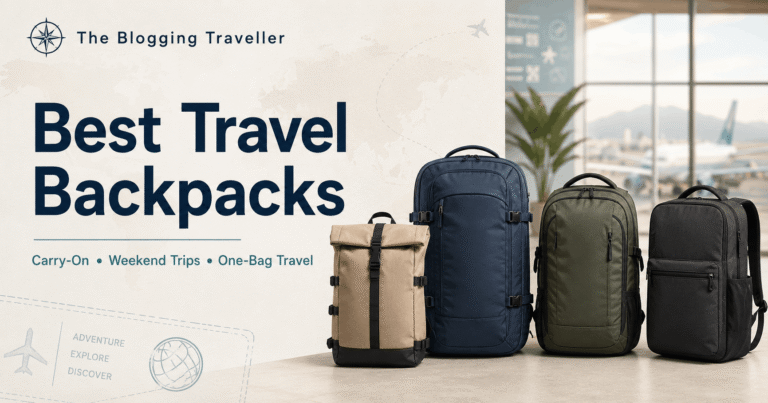
Incase you want something for travel, checkout our best travel backpacks guide.
Who Should Skip It
Skip it if maximum ventilation is your main concern, you need overnight capacity, or you prefer an extremely light frameless design.
Hikers seeking a women-specific Osprey fit should also compare the corresponding Tempest range.
Bottom Line
The Osprey Talon 22 is the best hiking backpack for most active day hikers because it balances capacity, support, organization, and fit without becoming excessively large.

#2. Patagonia Terravia Pack 22L, Best Day Hiking Backpack
The Patagonia Terravia Pack 22L is a practical hiking daypack with breathable shoulder straps, a raised back panel, hydration compatibility, useful external storage, and an included rain cover.
It provides enough room for normal day-hiking equipment while remaining simpler than a large framed pack.
Best for: Day hikes, warm-weather trails, casual outdoor travel, and carrying standard hiking essentials.
Capacity: 22L.
Hydration compatible: Yes.
Main strength: A well-rounded day-hiking layout with breathable materials and rain protection.
Main tradeoff: It does not provide the same heavy-load support as a larger framed hiking pack.
Why It Stands Out
The Terravia Pack 22L focuses on the features most day hikers regularly use.
The raised back panel and shoulder straps use breathable airmesh. Its hip belt helps control the load and includes pockets for snacks or small accessories.
A hydration sleeve and hose pass-through support reservoir use. Full-sized bottles can also be carried in the two side pockets.
Other practical details include:
- A small top pocket with a key clip
- A larger front pocket for maps or snacks
- Trekking-pole loops
- An exterior bungee system
- An included removable rain cover
- Recycled nylon ripstop fabric with a polyurethane coating
This makes it an appealing option for hikers who want trail features without an overly complicated layout.
What Could Be Better
The Terravia is still a compact daypack. Its hip belt and back structure are not intended to replace the load support of a larger internal-frame backpack.
The external bungee is useful for a jacket, but hikers carrying bulky photography equipment or extensive winter gear may need more structured storage.
Who Should Buy It
Buy it if most of your hikes are completed within one day and you want a breathable backpack with hydration support, bottle pockets, trekking-pole storage, and a rain cover.
It can also work well as a general outdoor backpack when you are not hiking.
Who Should Skip It
Skip it if you carry heavy loads, camping equipment, or enough gear for multiple days.
Minimalist hikers may also find a 22-liter pack larger than necessary for short local walks.
Bottom Line
The Patagonia Terravia Pack 22L is one of the best day hiking backpacks for hikers who want simple organization, breathable contact points, hydration storage, and built-in rain protection.
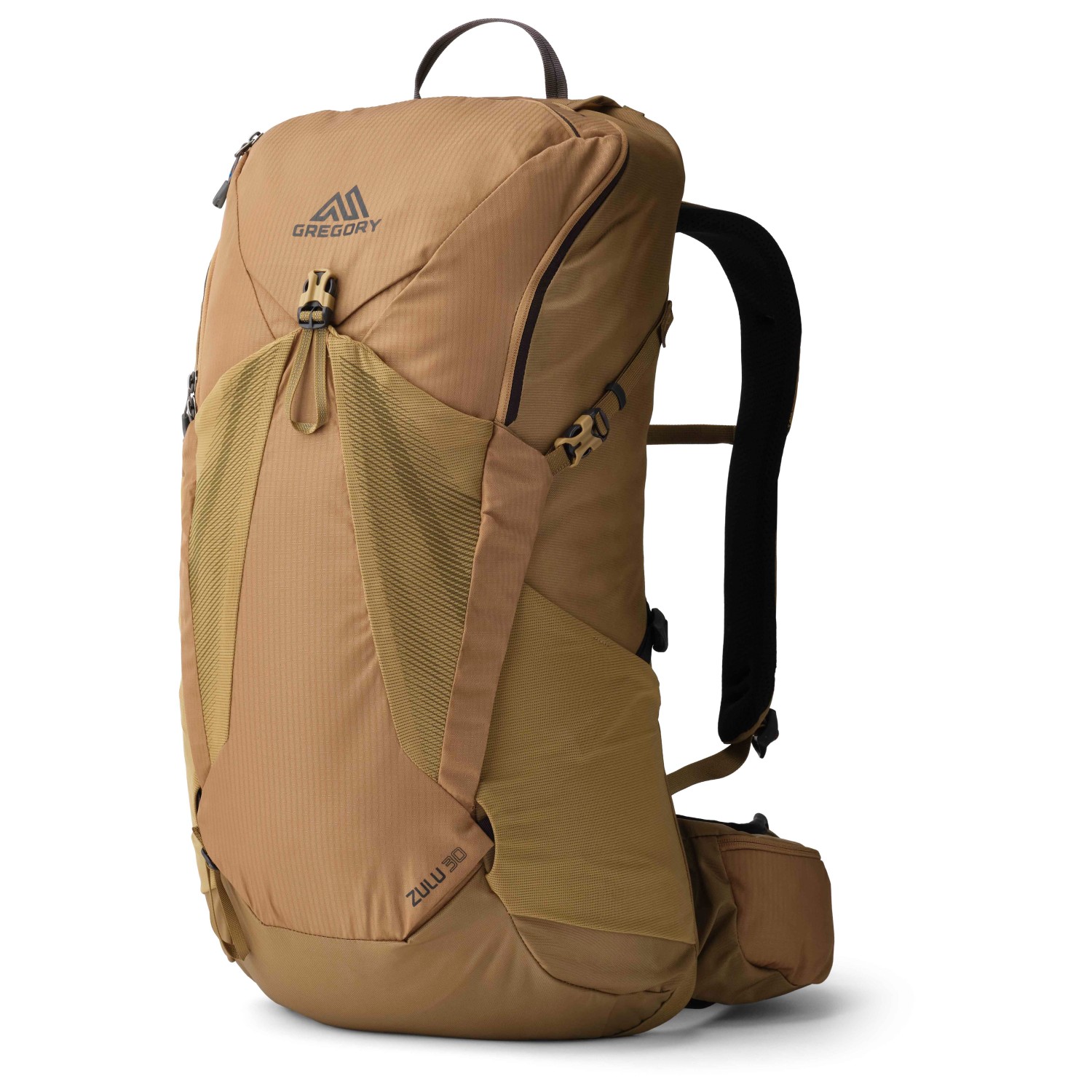
#3. Gregory Zulu 30, Best for Ventilation and Support
The Gregory Zulu 30 is designed for long day hikes and heavier trail loads. Its adjustable suspension, flexible hip belt, perimeter frame, and tensioned mesh back panel provide more support than most minimalist daypacks.
The 30-liter capacity also gives hikers extra room for cold-weather layers, food, water, or specialized gear.
Best for: Long day hikes, hot trails, heavier loads, mountain routes, and hikers who prioritize ventilation.
Capacity: 30L.
Hydration compatible: Yes.
Main strength: Supportive suspension with excellent back ventilation.
Main tradeoff: It is heavier and more complex than a basic hiking daypack.
Why It Stands Out
The tensioned mesh panel creates space between your back and the main body of the backpack. This allows more heat to escape than a flat fabric or foam back panel.
The Zulu’s FreeFloat hip belt is designed to flex with the user’s movement. Its perimeter frame adds structure, while torso adjustment helps the pack fit a wider range of body lengths.
The U-shaped main opening also provides easier access than a narrow traditional top-loading design.
Trail features include:
- Large hip belt pockets
- Stretch side pockets
- Hydration sleeve and reservoir hanger
- Adjustable torso length
- Supportive hip belt
- Perimeter frame
- Tensioned mesh back panel
- Compression straps
- Top storage pocket
The 30-liter volume can accommodate more equipment than most daypacks without moving fully into multi-day backpacking territory.
What Could Be Better
The stronger suspension and larger volume increase the weight and bulk.
For a short summer walk carrying only water and a light jacket, the Zulu 30 may feel excessive. Its curved, ventilated back structure can also affect how rectangular or bulky items fit inside.
Who Should Buy It
Buy the Zulu 30 if you take longer day hikes, carry extra water or layers, or frequently hike in hot conditions.
It is also worth considering if basic daypack straps create uncomfortable pressure on your shoulders.
Who Should Skip It
Skip it if you prefer a packable, minimalist backpack or rarely carry more than a few light items.
It may also be more backpack than necessary for city walks and occasional easy trails.
Bottom Line
The Gregory Zulu 30 is a comfortable hiking backpack for longer routes where ventilation, torso adjustment, and proper load transfer matter more than keeping the pack extremely light.

#4. Deuter Speed Lite 21, Best Lightweight Hiking Backpack
The Deuter Speed Lite 21 is designed for fast, uncomplicated movement on the trail. It has a 21-liter capacity, a low listed weight, breathable shoulder straps, a sternum strap, and a detachable waist belt.
Deuter recommends it for relatively light loads, which makes it better suited to efficient day-hiking kits than overloaded trail setups.
Best for: Fast day hikes, light trail loads, experienced packers, and hikers who dislike bulky backpacks.
Capacity: 21L.
Hydration compatible: Not confirmed.
Main strength: Lightweight construction with a clean, trail-focused design.
Main tradeoff: Limited load support compared with framed hiking packs.
Why It Stands Out
The Speed Lite 21 weighs 470 grams according to Deuter and is designed around the company’s Lite back system.
Its design includes:
- Ergonomic perforated shoulder straps
- An adjustable sternum strap
- A detachable waist belt
- Side compression straps
- A front mesh pocket
- Side mesh pockets
- A zippered top pocket
- An internal wet compartment
- Attachment loops
The main advantage is reduced pack weight. That leaves more of your carrying capacity available for water, food, clothing, and safety equipment.
Its streamlined shape should also move more naturally through narrow trails, rocky sections, or routes where a wide pack becomes inconvenient.
What Could Be Better
The detachable waist belt is primarily useful for stability. It does not provide the same padded load transfer as the hip belt on the Gregory Zulu 30 or Osprey Stratos 36.
Deuter lists a recommended load of 2 to 5 kilograms. Hikers who regularly exceed that range should consider a more supportive backpack.
Hydration compatibility is not clearly confirmed in the product information reviewed for this guide, so reservoir users should check the current version before buying.
Who Should Buy It
Buy it if you pack lightly and want an outdoor backpack that does not feel bulky during faster hikes.
It is particularly suitable for hikers who carefully limit unnecessary equipment.
Who Should Skip It
Skip it if you carry heavy camera equipment, multiple large water containers, winter layers, or overnight gear.
It is also not the strongest option for hikers who rely on a thick, load-bearing hip belt.
Bottom Line
The Deuter Speed Lite 21 is a strong lightweight hiking backpack for fast trails and carefully controlled loads, but it is not designed for heavy packing.
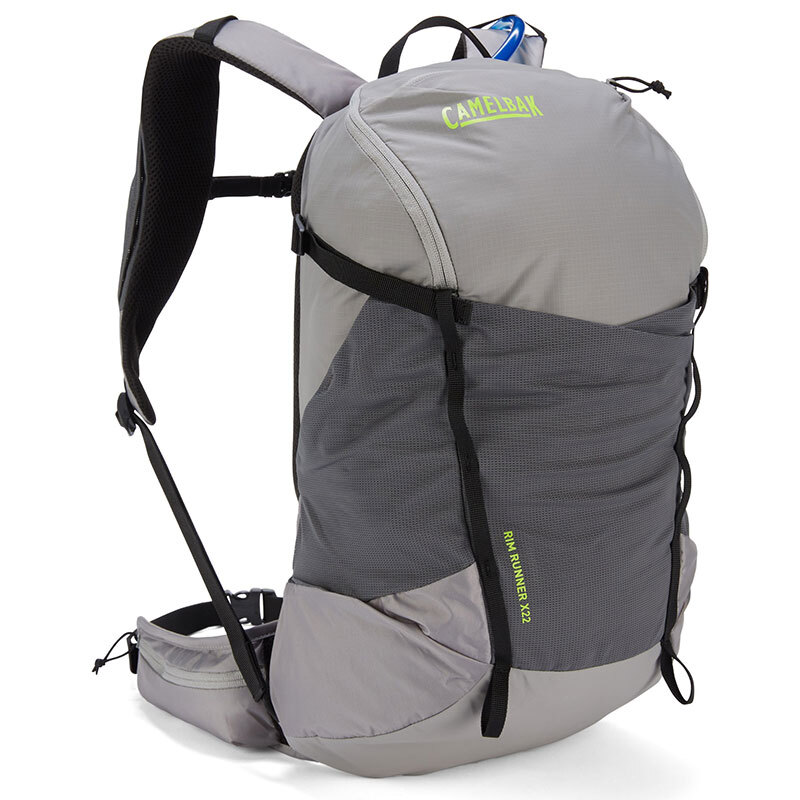
#5. CamelBak Rim Runner X22, Best Hydration Backpack
The CamelBak Rim Runner X22 is built around convenient water carry. The current version includes a 1.5-liter Crux reservoir, an internal hydration sleeve, tube management, ventilated back support, and bottle-friendly side pockets.
It also includes an overflow pocket for quickly storing or removing an outer layer.
Best for: Hydration-focused day hiking, warm climates, long trails, and hikers who prefer drinking through a hose.
Capacity: Not confirmed.
Hydration compatible: Yes, with a 1.5L reservoir included on the referenced version.
Main strength: A complete hydration setup designed specifically for hiking.
Main tradeoff: The removable stability belt provides less load transfer than a wide padded hip belt.
Why It Stands Out
Many hiking backpacks are compatible with a separately purchased bladder. The Rim Runner X22 stands out because hydration is central to the design.
Its reservoir, internal sleeve, and Tube Trap system help keep the drinking hose controlled while walking. The Air Support back panel uses body-mapped ventilation in the areas where heat commonly builds up.
Useful storage includes:
- Stretch side pockets
- A front overflow pocket
- A small-item organization pocket
- Internal hydration storage
- Compression straps
- An adjustable sternum strap
- A removable stability belt
- A key clip
This setup works well for hikers who drink frequently and do not want to stop every time they need water.
What Could Be Better
A 1.5-liter reservoir may not be sufficient for every long, hot, or remote route. Additional bottles may still be necessary depending on conditions and refill access.
The stability belt helps prevent movement but does not appear as substantial as the padded hip belts found on heavier load-carrying packs.
The exact total gear capacity was not clearly confirmed on the current manufacturer page reviewed, so check the version offered in your region.
Who Should Buy It
Buy the Rim Runner X22 if convenient hydration is your main priority and you prefer a ready-to-use reservoir system.
It is especially useful for warm-weather hiking where frequent sipping is easier than repeatedly reaching for a bottle.
Who Should Skip It
Skip it if you prefer bottles, dislike cleaning reservoirs, or need a heavily padded hip belt for carrying substantial weight.
It may also be unnecessary for short walks where one accessible bottle is enough.
Bottom Line
The CamelBak Rim Runner X22 is the best hydration backpack in this roundup because its reservoir, hose storage, ventilation, and trail pockets work together as a complete system.

#6. REI Co-op Flash 22, Best Budget Hiking Backpack
The REI Co-op Flash 22 is a simple, lightweight daypack with a 22-liter capacity, hydration support, bottle pockets, a tuck-away hip belt, and a removable back pad that can also be used as a sit pad.
Its frameless construction keeps the weight low, but it works best when packed carefully.
Best for: Budget-conscious hikers, short day hikes, travel, summit packs, and lightweight outdoor use.
Capacity: 22L.
Hydration compatible: Yes.
Main strength: Low pack weight with useful hiking features.
Main tradeoff: Frameless construction offers limited support for heavier equipment.
Why It Stands Out
The Flash 22 provides a useful amount of space without adding a heavy frame or complex suspension system.
Its hydration sleeve includes a reservoir hang loop and ports that allow the hose to be routed over either shoulder. Tall side pockets provide space for bottles or other frequently used gear.
Additional features include:
- A lightly padded mesh back
- Removable sit pad
- Breathable shoulder straps
- Detachable sternum strap
- Tuck-away mesh hip belt
- Top lid with a zippered pocket
- Side-entry security pocket
- External attachment loops
- Tool loop
- Adjustable exterior bungee
- Internal slip pockets
It can also be folded or packed more easily than many structured hiking backpacks.
What Could Be Better
Because the Flash 22 is frameless, the way you pack it affects comfort. Hard or irregular items can press against your back if they are not positioned carefully.
The thin hip belt improves stability but is not designed to transfer a heavy load efficiently.
A rain cover is not included, so wet-weather hikers should add a pack liner or separate cover.
Who Should Buy It
Buy it if you want an affordable, low-weight hiking daypack for moderate loads and normal day-hiking equipment.
It is also a practical secondary pack for travelers who want something lighter for trails and excursions.
Who Should Skip It
Skip it if you regularly carry heavy water loads, camera equipment, climbing gear, or overnight supplies.
Hikers who need adjustable torso sizing and strong lumbar support should choose a structured alternative.
Bottom Line
The REI Co-op Flash 22 offers excellent basic value for light day hiking, provided you understand the limitations of its frameless construction.

#7. Osprey Talon Pro 20, Best Premium Hiking Backpack
The Osprey Talon Pro 20 takes the active fit of the Talon range and adds more technical materials and weather-resistant details.
It uses NanoFly fabric reinforced with UHMWPE ripstop, an adjustable injection-molded back system, hydration storage, protected external zippers, and several equipment attachments.
Best for: Technical day hiking, alpine routes, scrambling, climbing approaches, and demanding multi-sport use.
Capacity: 20L.
Hydration compatible: Yes.
Main strength: Strong technical construction with a precise, stable harness.
Main tradeoff: Its specialized materials and attachments may be unnecessary for casual hiking.
Why It Stands Out
The Talon Pro 20 is designed for hikers and outdoor athletes who need more than a basic daypack.
Its back panel combines a supportive framesheet with a close-to-body fit and ventilated airflow channels. A sliding torso adjustment system helps the wearer refine the harness position.
The BioStretch harness and hip belt are designed to remain stable during active movement.
Features include:
- Panel access to the main compartment
- Internal hydration reservoir sleeve
- Weather-resistant external zippers
- Reinforced technical fabric
- Stretch side pockets
- Front stretch pocket
- Dual hip belt pockets
- Compression straps
- Ice-axe attachments
- Helmet attachment
- Adjustable torso fit
This makes it more suitable for technical outdoor use than a simple walking backpack.
What Could Be Better
The 20-liter capacity limits how much bulky equipment can fit inside.
Its specialized construction also places it in a more premium category than basic hiking daypacks. Many casual hikers will not benefit enough from the advanced materials to justify choosing it over the regular Talon 22.
The close-to-body back panel prioritizes stability rather than creating the largest possible ventilation gap.
Who Should Buy It
Buy it if you regularly move through demanding terrain and want a compact technical pack with strong materials, stable carry, and outdoor attachment points.
It also suits hikers who use the same backpack for climbing, cycling, or other active sports.
Who Should Skip It
Skip it if you mainly walk easy trails, want maximum ventilation, or prefer simple storage without equipment attachments.
The standard Talon 22 provides more capacity and may be the more practical choice for general hiking.
Bottom Line
The Osprey Talon Pro 20 is a premium trail backpack for technical users, but its advanced construction is more than most occasional hikers need.

#8. Osprey Stratos 36, Best Overnight Hiking Backpack
The Osprey Stratos 36 provides more room and load support than the daypacks in this guide. Its 36-liter capacity, perimeter frame, trampoline-style mesh back panel, padded hip belt, hydration storage, lower gear compartment, and included rain cover suit long hikes and light overnight trips.
It can also work for demanding full-day routes where extra clothing, food, or specialist equipment is required.
Best for: Long day hikes, light overnight trips, hut-to-hut routes, and hikers carrying extra equipment.
Capacity: 36L.
Hydration compatible: Yes.
Main strength: Strong ventilation, supportive suspension, and organized storage.
Main tradeoff: Too large and heavy for ordinary short hikes.
Why It Stands Out
The Stratos uses Osprey’s AirSpeed suspension. A perimeter frame holds the tensioned mesh back panel away from the main compartment, creating airflow while supporting the load.
The harness includes load lifters, and the padded hip belt is designed to transfer more weight away from the shoulders.
Storage features include:
- Top-loading main compartment
- Fixed lid with two storage areas
- Lower zippered compartment
- Front stash pocket
- Two hip belt pockets
- Stretch bottle pockets
- Hydration sleeve and hose port
- Compression straps
- Trekking-pole storage
- Sleeping-pad straps
- Gear attachment loops
- Included rain cover
The 36-liter size can handle a minimalist overnight setup, although actual suitability depends on the volume of your shelter, sleeping system, food, and seasonal clothing.
What Could Be Better
The frame, suspension, rain cover, and organization increase the backpack’s empty weight.
A 36-liter pack can encourage overpacking, particularly on a route that could be completed with a 20-liter daypack.
The top-loading format is also less convenient for reaching items at the middle of the main compartment than a wide panel-opening bag.
Who Should Buy It
Buy the Stratos 36 if you take long hikes, carry cold-weather equipment, or need space for a compact overnight setup.
It is also a good option for hikers who prioritize airflow and hip-belt support over minimum pack weight.
Who Should Skip It
Skip it if most of your hikes last only a few hours or your complete trail kit fits comfortably in a 15L to 25L hiking daypack.
Ultralight backpackers may also prefer a simpler and lighter design.
Bottom Line
The Osprey Stratos 36 is the best overnight hiking backpack in this ranking for hikers who want ventilation, support, hydration storage, and more organized capacity.
Also Read: 11 BEST Travel Backpacks in 2026 [Ranked & Compared]
How to Choose the Best Hiking Backpack
The right backpack for hiking should fit both your body and the type of trail you plan to follow. Do not choose a pack based only on its appearance, capacity number, or number of pockets.
Choose the Right Capacity
Backpack capacity is normally measured in liters. The volume you need depends on trip length, weather, water requirements, and the size of your equipment.
10L to 20L
This range is suitable for:
- Short hikes
- Local nature trails
- Warm-weather walks
- Light hydration carry
- A snack and thin rain jacket
- Minimal emergency equipment
A small pack reduces unnecessary weight, but it may not leave enough room for insulating layers or additional water.
20L to 30L
This is the most versatile range for day hiking.
It normally offers space for:
- Water
- Food
- Rain protection
- Warm layers
- First-aid equipment
- Navigation tools
- Headlamp
- Sunscreen
- Small accessories
A 20L to 30L day hiking backpack is usually the best starting point for someone buying their first proper trail pack.
30L to 45L
This range works for:
- Long day hikes
- Winter hiking
- Photography equipment
- Family gear
- Light overnight trips
- Bulky clothing
- Routes requiring additional water
These packs often include stronger hip belts and more structured suspension systems.
Also Read: 10 BEST Backpacks for College [My TOP Picks]
45L and Above
Backpacks above 45 liters are generally intended for multi-day backpacking, camping equipment, or trips requiring larger food and clothing loads.
They are usually unnecessary for ordinary day hiking.
Bigger is not always better. A large backpack weighs more, can feel less stable, and makes it easier to carry items you do not need.
Check the Comfort and Fit
The best backpack is not helpful if it does not fit your body.
Torso length is more important than your overall height. Manufacturer sizing can also vary between models, so check the torso range for the specific size you are considering.
A hiking harness may include:
- Shoulder straps: These should follow your shoulders without creating gaps or concentrated pressure.
- Sternum strap: This helps stabilize the shoulder straps but should not restrict breathing.
- Hip belt: A supportive hip belt should wrap around the upper hip bones rather than sitting around the trouser waist.
- Load lifters: These help control the upper section of larger packs.
- Adjustable torso: This allows the shoulder harness to match your torso length.
- Compression straps: These reduce load movement inside a partly filled backpack.
Try the pack with realistic weight inside. An empty backpack can feel comfortable even when its loaded fit is poor.
Look for Good Back Panel Ventilation
Back panel ventilation becomes particularly important on hot trails and steep climbs.
Common systems include:
- Padded foam channels
- Perforated foam
- Breathable mesh
- Raised contact pads
- Tensioned trampoline mesh
A tensioned mesh system usually creates the largest airflow gap. However, it can add weight and curve the internal storage space.
Close-to-body panels usually provide better stability during fast or technical movement, but they may feel warmer.
Choose according to your climate and hiking style rather than assuming one system is always best.
Also Read: 9 BEST Backpacks for Sports and Gym [My TOP Picks]
Think About Hydration Compatibility
A hydration-compatible backpack normally includes an internal sleeve, a hanging point, and a port for routing the drinking hose.
Reservoirs are useful because you can drink while walking without removing the backpack. This encourages frequent sipping on long or hot hikes.
However, hydration bladders have disadvantages:
- They require regular cleaning
- Remaining water can be difficult to judge
- Leaks can wet other equipment
- Refilling may require unpacking the bag
- The reservoir occupies internal storage
Side bottle pockets provide easier refilling and make it simple to see how much water remains.
Many hikers use both systems. A reservoir can provide the main water supply, while a bottle carries electrolytes or backup water.
Check Pocket Layout and Access
A useful pocket should make important equipment easier to reach.
Side Stretch Pockets
These are commonly used for bottles, trekking poles, sandals, or wet equipment. Check whether you can reach a bottle while wearing the backpack.
Hip Belt Pockets
Hip belt pockets are useful for:
- Snacks
- Sunscreen
- Lip balm
- Small navigation tools
- Tissues
- A compact phone
Check the pocket dimensions because some are too small for modern smartphones.
Front Shove-It Pocket
A large stretch pocket is useful for a wet rain jacket, gloves, or an extra layer. It separates damp items from the main compartment.
Top Pocket
A top pocket keeps small gear visible and accessible, but an overloaded lid can make the backpack top-heavy.
Main Compartment Access
Top-loading packs are simple and secure. Panel-opening and U-shaped zippers make it easier to reach equipment stored lower in the bag.
Too Many Pockets
More organization is not automatically better. Numerous small pockets can divide usable capacity and make it difficult to remember where gear is stored.
Choose a layout that matches how you actually pack.
Consider Materials and Weather Resistance
Outdoor backpacks commonly use nylon or polyester fabrics. Fabric thickness, weave, reinforcement, coatings, stitching, and construction all affect durability.
Look for:
- Reinforced base fabric
- Durable stretch pockets
- Quality stitching
- Protected zippers
- Water-resistant coatings
- Included rain cover
- Strong attachment points
A water-resistant hiking backpack can handle light rain or splashes, but it should not be treated as completely waterproof.
During heavy or prolonged rain, use:
- A waterproof pack liner
- Individual dry bags
- Waterproof electronics cases
- A fitted rain cover
A rain cover protects the outside but may not stop water entering through the back panel or harness area.
Do Not Ignore Weight
A backpack’s empty weight becomes part of everything you carry.
A heavy pack may feel comfortable in a shop, but the total changes once you add:
- Two or three liters of water
- Food
- A rain jacket
- Insulation
- First-aid supplies
- Navigation equipment
- Camera gear
- Emergency items
Lightweight packs reduce the base load. However, removing the frame, padding, and hip belt can make heavy contents less comfortable.
Choose the lightest backpack that still provides enough support for your normal packed weight.
Match the Backpack to Your Hiking Style
Short Hikes
Choose a small hiking daypack with bottle storage and enough space for weather protection and emergency essentials. Even on shorter routes, the American Hiking Society’s essential hiking checklist recommends carrying water, navigation tools, extra food, rain protection, and basic safety equipment.
Long Day Hikes
Look for a supportive hip belt, good ventilation, hydration storage, accessible food pockets, and enough room for changing conditions. Organize the backpack so water, snacks, navigation equipment, and extra layers remain accessible without unpacking everything.
Hot-Weather Hiking
Prioritize back panel airflow, hydration capacity, breathable straps, and easily accessible water. The CDC’s heat-safety guidance recommends carrying water, drinking regularly, taking breaks, and watching for symptoms of overheating.
Mountain Trails
A stable close-to-body harness, compression straps, trekking-pole storage, and secure pockets become more important on uneven terrain. The US Forest Service hiking guidance also recommends considering a hiking pole or walking stick for balance across uneven or hazardous ground.
Photography Hikes
Choose extra capacity and carefully consider internal access. Camera inserts consume more room than their external dimensions suggest. The backpack should also prevent heavy equipment from moving around while keeping frequently used lenses accessible.
Also Read: 11 BEST Backpacking Backpacks for Trail [My TOP Picks]
Overnight Trips
Look for a proper load-bearing hip belt, structured suspension, compression straps, and space for shelter, sleep equipment, food, and additional clothing. This backpacking gear organization guide recommends creating a checklist and identifying necessities such as a tent, sleeping bag, extra socks, and emergency essentials before packing.
Beginner Hikers
Start with a simple 20L to 25L backpack rather than buying a technical multi-day pack. Upgrade only when your routes and equipment genuinely require it. The American Hiking Society’s beginner hiking guide provides a useful introduction to basic preparation, essential equipment, water, clothing, navigation, and trail safety.
Common Hiking Backpack Mistakes to Avoid
Buying a Backpack That Is Too Large
Extra space makes overpacking tempting. Choose a capacity for your normal hiking kit rather than rare future trips.
Ignoring Hip Belt Comfort
A stiff, narrow, or poorly positioned hip belt can become painful once the backpack is loaded.
Choosing Poor Ventilation for Hot Weather
A flat padded back may feel comfortable initially but become hot and wet during long climbs.
Forgetting Hydration Needs
Check how much water your route requires and whether the backpack supports your preferred reservoir or bottles.
Ignoring Torso Fit
Shoulder strap adjustment cannot fully correct a backpack that is too long or too short for your torso.
Buying Only for Looks
A stylish backpack may lack ventilation, bottle access, load support, or secure trail storage.
Choosing Too Many Pockets
Complicated organization adds weight and can reduce flexible packing space.
Ignoring Rain Protection
Water-resistant fabric alone may not protect clothing, electronics, or medical supplies during prolonged rain.
Overpaying for Features You Will Not Use
Ice-axe loops, helmet carriers, premium technical fabrics, and climbing attachments are valuable only when they match your activities.
Also Read: 10 BEST Lightweight Backpacks [My TOP Picks]
Final Verdict: What Is the Best Hiking Backpack?
The Osprey Talon 22 is our best overall choice among the best hiking backpacks. Its adjustable fit, active harness, 22-liter capacity, hydration sleeve, front stretch storage, hip belt pockets, and equipment attachments make it suitable for a wide range of day hikes.
Choose the Patagonia Terravia Pack 22L for straightforward day hiking with breathable materials and an included rain cover.
The Deuter Speed Lite 21 is the best lightweight option for hikers carrying a controlled, minimal load.
Choose the CamelBak Rim Runner X22 when an included hydration system and convenient drinking access are your main priorities.
The REI Co-op Flash 22 provides the best budget-friendly balance of weight, capacity, hydration support, and trail storage.
The Osprey Talon Pro 20 is the best premium choice for technical terrain and multi-sport use.
The Gregory Zulu 30 offers the strongest combination of ventilation and support for longer day hikes.
For light overnight routes, the Osprey Stratos 36 provides the most suitable capacity, suspension, and gear organization in this roundup.
FAQs About the Best Hiking Backpacks
What is the best hiking backpack for most people?
The Osprey Talon 22 is the best hiking backpack for most day hikers because it combines a manageable 22-liter capacity with an adjustable harness, supportive hip belt, hydration storage, stretch pockets, and trekking-pole attachments. Hikers who prioritize maximum airflow may prefer the Gregory Zulu 30.
What size backpack is best for hiking?
A 20L to 30L hiking backpack is suitable for most day hikes. It provides room for water, food, rain protection, warm layers, navigation equipment, and first-aid supplies. Short hikes may only require 10L to 20L, while overnight trips often need 30L to 45L or more.
Is a 20L backpack enough for hiking?
A 20L backpack is normally enough for a short or moderate day hike when the weather is predictable and your gear is compact. It can carry water, snacks, a rain jacket, a light layer, and emergency items. Winter clothing, camera gear, or extra family equipment may require more space.
Do I need a hip belt on a hiking backpack?
A hip belt is useful when the backpack carries several liters of water or other heavy equipment. A padded belt transfers more of the load toward the hips, while a thin webbing strap mainly controls pack movement. Very light daypacks can remain comfortable without a substantial hip belt.
Are hiking backpacks waterproof?
Most hiking backpacks are water-resistant rather than fully waterproof. Coated fabrics and protected zippers can handle light rain, but water may eventually enter through seams, openings, or the back panel. Use a pack liner, dry bags, or an included rain cover when hiking in sustained rain.
What is the best hiking backpack for day hikes?
The Patagonia Terravia Pack 22L is a strong day-hiking choice because it combines breathable straps, a raised back panel, hydration compatibility, bottle pockets, trekking-pole loops, front storage, and an included rain cover. The Osprey Talon 22 is better when adjustable fit and active load stability are higher priorities.
Can I use a regular backpack for hiking?
A regular backpack can work for a short, easy hike when carrying a light load. However, it may lack ventilation, bottle access, a sternum strap, hydration storage, and a supportive hip belt. A proper hiking backpack becomes more valuable on longer, hotter, steeper, or more remote trails.
What should I pack in a hiking backpack?
Carry water, food, weather-appropriate layers, rain protection, navigation tools, sun protection, a headlamp, basic first aid, emergency supplies, and any medication you require. The exact list depends on trail length, weather, terrain, remoteness, and refill access. Avoid filling spare space with unnecessary equipment.
![10 BEST Lightweight Backpacks [My TOP Picks]](https://thebloggingtraveller.net/wp-content/uploads/2026/07/ChatGPT-Image-Jul-20-2026-11_28_18-PM-768x432.png)
![9 BEST Backpacks for Sports and Gym Gear [2026]](https://thebloggingtraveller.net/wp-content/uploads/2026/07/ChatGPT-Image-Jul-15-2026-10_11_57-PM-1-1-768x432.png)