11 BEST Backpacking Backpacks for Trail [My TOP Picks]
![11 BEST Backpacking Backpacks for Trail [My TOP Picks]](https://thebloggingtraveller.net/wp-content/uploads/2026/07/11-BEST-Backpacking-Backpacks-for-Trail-My-TOP-Picks-1024x576.png)
Best Backpacking Backpacks for Overnight and Multi-Day Trips
The best backpacking backpacks do much more than hold outdoor gear. Unlike an ordinary hiking daypack, a proper backpacking pack must support a tent, sleeping bag, sleeping pad, food, water, stove, clothes, extra layers, and smaller trail essentials without dragging painfully on your shoulders.
That is why fit, frame structure, hip belt comfort, ventilation, and load transfer matter so much. A well-fitted internal frame backpack directs much of the packed weight toward your hips. The wrong pack can pull backward, rub your shoulders, trap heat, or make every uphill section feel longer than it really is.
In this guide, I have compared 11 trail-focused options for overnight hikes, weekend camping, longer trekking routes, lightweight trips, and heavier outdoor loads. I have not treated every backpack as perfect. Some provide outstanding support but feel heavy when empty, while lighter packs require careful packing and lower gear weight.
The goal is to help you find a backpack for backpacking that fits your body, gear volume, trip length, and preferred hiking style.
Trail-Ready Quick Picks
- Best Overall: Osprey Atmos AG 65, for its adjustable fit, ventilation, organization, and comfortable wraparound suspension.
- Best for Beginners: REI Co-op Trailmade 60, thanks to its approachable layout and adjustable back panel.
- Best Lightweight Pack: Osprey Exos 58, for experienced backpackers reducing pack weight without abandoning framed support.
- Best for Heavy Loads: Gregory Baltoro 65, with a substantial suspension system and supportive dynamic hip belt.
- Best Women’s Backpacking Backpack: Osprey Aura AG 65, offering a women-specific fit and well-ventilated suspension.
- Best Budget Option: REI Co-op Trailmade 60, providing practical backpacking features without a premium design.
- Best for Weekend Trips: REI Co-op Flash 55, combining manageable weight, adjustable fit, and adaptable storage.
- Best for Long Trips: Deuter Aircontact Core 50+10, with expandable room, strong load transfer, and trekking-focused organization.
- Best Adjustable Fit: Mystery Ranch Bridger 65, offering extensive harness adjustment and excellent equipment access.
What Makes a Backpack Good for Backpacking?
A backpacking backpack must manage both gear volume and physical load. A comfortable empty pack can still become miserable once food, water, shelter, and sleeping equipment are added.
Internal Frame Support
Most modern backpacking packs use an internal frame, frame sheet, aluminum stays, or a combination of these components. The structure keeps the pack from collapsing and helps control how the load moves.
A backpack with a frame usually feels more stable when walking over rocks, slopes, roots, and uneven ground. It also helps prevent hard equipment from pressing directly into your back.
Hip Belt Comfort and Load Transfer
The hip belt is not a decorative strap. It should wrap securely around the upper part of your hips and carry a meaningful portion of the pack’s weight.
A supportive frame connects the pack body to the hip belt. This transfers pressure away from the shoulders and toward the stronger muscles around your hips and legs. Osprey’s fitting guidance explains why the hip belt should be adjusted before the shoulder harness.
Also Read: 11 BEST Travel Backpacks for Women [My TOP Picks]
Torso Adjustability
Backpack size is not determined by your total height alone. Two people of the same height can have different torso lengths.
An adjustable harness makes it easier to position the shoulder straps, hip belt, and load lifters correctly. Fixed-length packs can still fit well, but you need to select the correct torso size before buying.
Ventilated Back Panel
Mesh suspension and airflow channels reduce direct contact between your back and the pack. They cannot prevent sweating completely, especially in hot or humid conditions, but they can make long climbs feel less clammy.
Highly ventilated panels can place the load slightly farther from your back. That tradeoff may be noticeable with heavy or poorly balanced loads.
Capacity for Overnight and Multi-Day Gear
Your backpack must hold the gear you actually own. A compact sleeping bag and tent may fit easily inside a 50L backpack, while bulky beginner equipment could require a 60L or 65L backpack for the same trip.
Food volume also grows with trip length. A comfortable weekend pack may become cramped when carrying five days of meals or shared group equipment.
Lower Access and Sleeping Bag Compartments
A separate sleeping bag compartment can prevent you from emptying the entire pack at camp. Some hikers love this separation, while others remove the divider and use one large packing space.
Front or side access is also useful when rain gear or cooking equipment has slipped into the middle of a top-loading pack.
External Attachment Points
Trekking pole loops, ice-tool attachments, daisy chains, and compression straps allow awkward gear to sit outside the main compartment. These features help with wet tents, foam pads, camp sandals, and tools.
Loose equipment can catch on branches or affect balance, so external storage should remain controlled.
Hydration and Water Bottle Access
A hydration-compatible pack normally includes an internal reservoir sleeve, hose opening, and routing points. Compatibility does not always mean a reservoir is included.
Side pockets should hold bottles securely while remaining reachable. I find a pocket less useful when the bottle fits perfectly at home but requires removing the pack every time I need a drink.
Compression Straps
Compression straps reduce movement inside a partly filled pack. They can also secure tent poles, a sleeping pad, or other long equipment.
However, straps positioned directly across zippered openings can slow access. Think about whether stability or quick entry matters more for your packing style.
Durability, Weather Resistance, and Weight
Thicker fabric usually handles scraping and rough use better, but it adds weight. Lightweight materials save energy over long distances, although they may require more careful handling.
Water-resistant fabric is not the same as waterproof construction. Seams, zipper openings, and the roll-top or drawcord closure can still allow water inside. Use dry bags or a waterproof liner for sleeping equipment and clothing.
Best Backpacking Backpacks: My TOP Picks
#1. Osprey Atmos AG 65, Best Overall
The Atmos AG 65 earns the top position because it balances supportive carrying, airflow, adjustment, and practical trail storage. I would consider it first for a backpacker who wants comfort without moving into a stripped-down ultralight setup.
Best for: Beginner and intermediate backpackers wanting an adaptable all-rounder
Capacity: 65L in S/M, with capacity varying by size
Frame type: Internal frame with AntiGravity suspension
Recommended trip length: 3 to 5 days
Main strength: Supportive, highly ventilated suspension
Main tradeoff: Heavier and more structured than lightweight alternatives
Why it works for backpacking:
Its continuous mesh suspension wraps around the back and hip area instead of concentrating pressure in a few small spots. That design should feel especially appealing when a long climb makes every poorly positioned strap noticeable.
The adjustable torso, load lifters, hip belt, compression straps, bottle pockets, and external storage cover the features most backpackers regularly use. Its 65L capacity also leaves enough room for bulkier sleeping equipment or several days of food.
What could be better:
The extensive suspension and organization add noticeable empty weight. The curved back panel can also reduce the simplicity of the main packing space compared with a straight, frameless bag.
Best for this type of backpacker:
Choose it when comfort, ventilation, and adjustability matter more than achieving the lowest possible base weight.
Who should skip it:
Minimalist hikers carrying compact equipment may find it unnecessarily large and heavy. A 50L backpack or lightweight 55L model would make more sense.
Bottom line:
The Atmos AG 65 is one of the most balanced options for ordinary multi-day backpacking. It provides enough structure for real camping loads without becoming a specialist expedition pack.
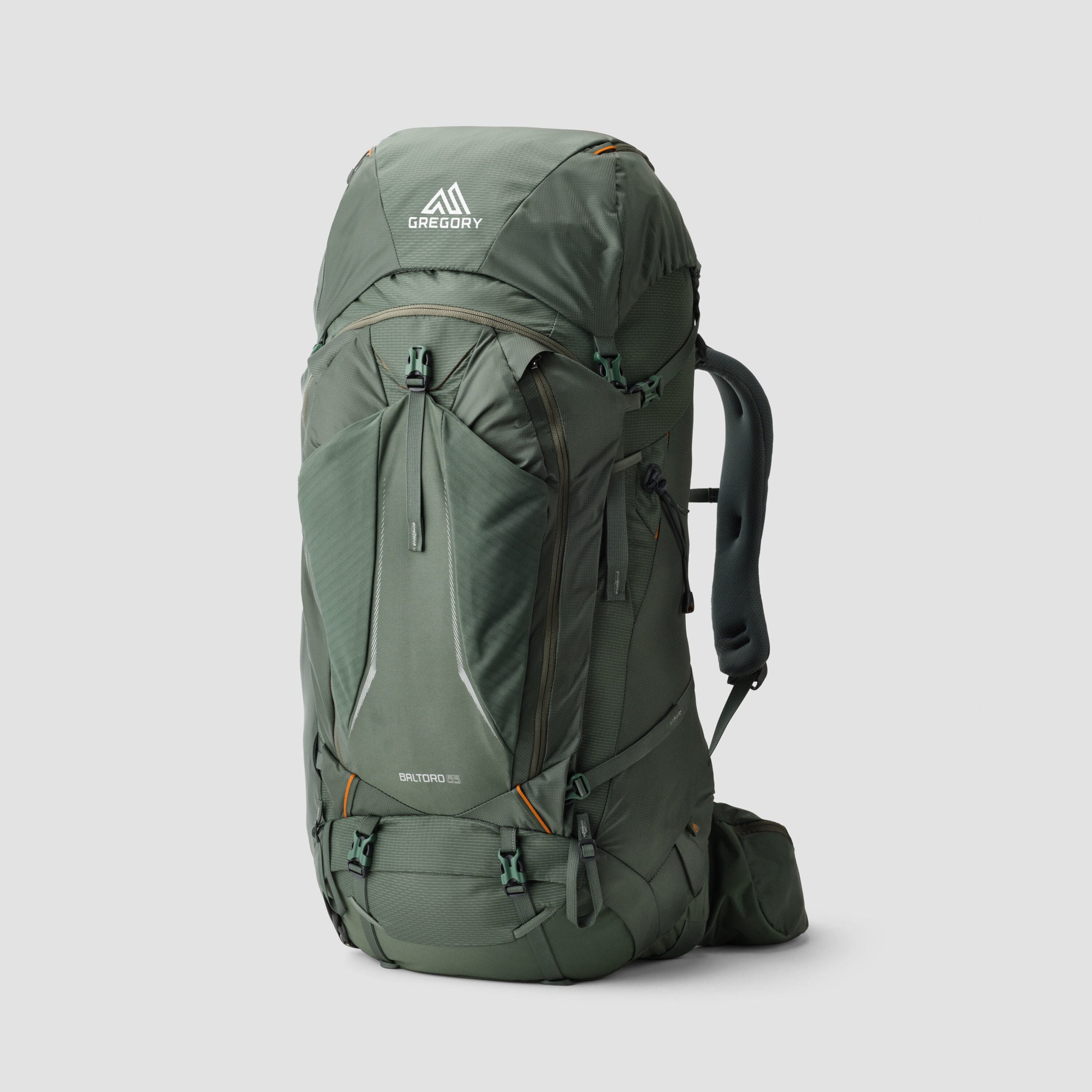
#2. Gregory Baltoro 65, Best for Heavy Loads
The Baltoro 65 is built around carrying comfort rather than minimal empty weight. Its rotating harness elements and supportive hip belt make it suitable for backpackers hauling food, shared shelter, camera equipment, or heavier beginner gear.
Best for: Backpackers carrying substantial multi-day loads
Capacity: 65L
Frame type: Internal frame
Recommended trip length: 3 to 5 days
Main strength: Stable, supportive load transfer
Main tradeoff: Heavy compared with lightweight backpacking packs
Why it works for backpacking:
Gregory’s FreeFloat system allows the hip belt to move with the body rather than feeling completely rigid. That movement can help on uneven ground, where the hips rotate constantly while the pack needs to remain controlled.
The adjustable harness, breathable back padding, lower access, lid storage, compression, and practical pockets make it suitable for organized multi-day packing.
What could be better:
You begin every walk with more pack weight before adding a single piece of gear. The substantial harness can also feel excessive during a light overnight trip.
Best for this type of backpacker:
It suits backpackers who willingly accept extra pack weight in exchange for cushioning, structure, and load control.
Who should skip it:
Thru-hikers, ultralight backpackers, and people consistently carrying modest loads should look at the Exos, Crown3, or Mariposa.
Bottom line:
The Baltoro 65 is a strong heavy-load choice, particularly when supportive carrying matters more than moving quickly with a minimalist kit.
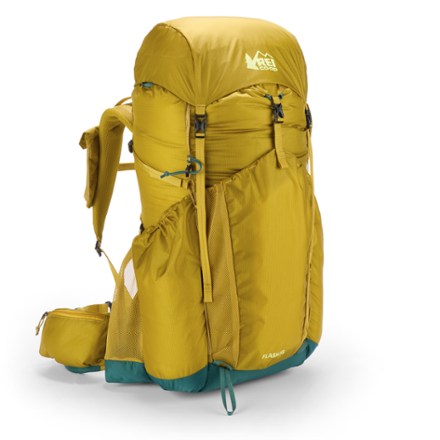
#3. REI Co-op Flash 55, Best for Weekend Trips
The Flash 55 sits between traditional framed packs and more demanding ultralight designs. Its 55L capacity and adjustable torso make it a practical weekend backpacking pack that can stretch into longer trips with compact gear.
Best for: Weekend backpacking and lighter multi-day trips
Capacity: 55L
Frame type: Integrated internal suspension
Recommended trip length: Overnight to 4 days
Main strength: Adaptable balance of weight and support
Main tradeoff: Not designed around very heavy loads
Why it works for backpacking:
The suspension stabilizes the load while the adjustable torso provides more fitting flexibility than many fixed ultralight packs. Its external pockets and compression system provide space for wet layers, bottles, and frequently used equipment.
I also like the idea of being able to strip down organization for a short trip instead of carrying every removable component out of habit.
What could be better:
The lighter build does not provide the same heavily padded sensation as the Atmos or Baltoro. Backpackers with bulky, heavy gear may push it beyond its most comfortable role.
Best for this type of backpacker:
It works for people who have started reducing gear weight but still want recognizable backpacking support and adjustment.
Who should skip it:
Choose a heavier-duty pack if you regularly carry substantial water, winter equipment, or group supplies.
Bottom line:
The Flash 55 is an excellent bridge between beginner-friendly comfort and lightweight backpacking. It makes the most sense for efficient weekend packing.

#4. Osprey Exos 58, Best Lightweight Backpack
The Exos 58 is designed for experienced hikers who count pack weight but still want a framed and ventilated carrying system. It offers enough capacity for multi-day food and shelter without the bulk of a traditional heavy-load pack.
Best for: Lightweight backpackers and long-distance hikers
Capacity: 58L, depending on size and version
Frame type: Internal frame
Recommended trip length: 2 to 5 days
Main strength: Low weight with suspended ventilation
Main tradeoff: Less cushioning and organization
Why it works for backpacking:
The suspended back panel keeps airflow moving while the frame maintains shape and transfers weight toward the hip belt. External stretch storage and compression help manage rain layers, bottles, and a wet shelter.
It feels like a logical option when your gear has become compact, but you are not ready to rely on a frameless sack.
What could be better:
Padding and compartmentalization are more restrained than on full-featured packs. Poor packing technique or an unnecessarily heavy load will be more noticeable.
Best for this type of backpacker:
The Exos suits high-mileage hikers with a reasonably light sleeping system, shelter, and cooking kit.
Who should skip it:
Beginners carrying bulky equipment or people prioritizing thick padding should choose the Atmos, Baltoro, or Aircontact Core.
Bottom line:
This is a lightweight backpacking backpack for someone who understands their gear and wants to reduce pack weight without losing frame support.

#5. Osprey Aura AG 65, Best Women’s Backpacking Backpack
The Aura AG 65 brings the supportive, ventilated Atmos concept into a women-specific fit. The harness geometry, torso sizing, and hip belt are designed around different body proportions rather than simply changing the color.
Best for: Women wanting adjustable comfort for multi-day loads
Capacity: 65L, varying by size
Frame type: Internal frame with AntiGravity suspension
Recommended trip length: 3 to 5 days
Main strength: Supportive women-specific fit
Main tradeoff: High empty weight for lightweight hikers
Why it works for backpacking:
The wraparound mesh suspension helps distribute pressure across the back and hips. Multiple adjustment points allow the pack to sit closer to the body, which matters when scrambling over rough ground or climbing steadily.
The organization is substantial enough for food, sleeping equipment, water, layers, and smaller trail items.
What could be better:
The full suspension and pocket layout add complexity and weight. Smaller backpackers with compact equipment may find 65L unnecessarily large.
Best for this type of backpacker:
It is a strong choice for women prioritizing ventilation, cushioning, and adjustable support over ultralight simplicity.
Who should skip it:
Women with lightweight kits should compare the women’s Flash 55 or Crown3 instead.
Bottom line:
The Aura AG 65 is the most convincing women’s option here for supportive multi-day carrying, provided its shape suits the individual wearer.
#6. Granite Gear Crown3 60, Best Modular Lightweight Pack
The Crown3 60 stands out because its support can be adjusted to match the load. It uses a removable polyethylene frame sheet and offers a more adaptable setup than many fixed lightweight packs.
Best for: Backpackers moving toward lighter gear
Capacity: 60L
Frame type: Removable PE frame sheet
Recommended trip length: 2 to 5 days
Main strength: Customizable weight and support
Main tradeoff: Torso length is selected rather than adjusted
Why it works for backpacking:
The frame sheet, dual-density hip belt, load lifters, roll-top closure, compression straps, hydration sleeve, and large exterior storage create a practical trail system. Granite Gear rates the standard frame configuration for loads up to 35 pounds, while an optional stay can increase support.
Removing the lid or frame lets experienced hikers simplify the pack as their total load falls.
What could be better:
The removable parts require some judgment. Removing too much structure while keeping a heavy food load could turn a comfortable pack into a sagging one.
Best for this type of backpacker:
It suits people who want one pack to cover conventional weekend loads and lighter, more minimalist trips.
Who should skip it:
Backpackers wanting thick cushioning, maximum ventilation, or simple torso adjustment may prefer a more conventional pack.
Bottom line:
The Crown3 60 offers an unusually useful middle ground between a structured 60L backpack and a lighter roll-top trail pack.
#7. Deuter Aircontact Core 50+10, Best for Trekking
The Aircontact Core 50+10 is designed for backpacking and trekking where load stability matters over long days. Its expandable collar provides additional room without forcing the pack to remain fully extended on shorter trips.
Best for: Trekking routes and equipment-heavy multi-day trips
Capacity: 50+10L
Frame type: External aluminum Y-frame within the back system
Recommended trip length: 3 to 5 days
Main strength: Stable carrying and expandable volume
Main tradeoff: Heavy and highly structured
Why it works for backpacking:
The VariClick adjustment, mobile shoulder straps, VariFlex hip fins, and aluminum Y-frame work together to keep the load controlled. The hip fins are built to spread pressure instead of allowing the pack to hang mainly from the shoulders.
The expandable capacity is useful when a trip begins with several days of food and gradually becomes easier to pack.
What could be better:
It is not the pack I would choose for fast, minimalist trail mileage. The structure that makes it stable also adds weight and bulk.
Best for this type of backpacker:
It works for trekkers carrying varied equipment, bulkier camping gear, or supplies across consecutive long days.
Who should skip it:
Ultralight hikers and people packing only for one night will probably find it excessive.
Bottom line:
The Aircontact Core provides dependable support for long trekking days when comfort under a structured load matters more than minimal pack weight.

#8. Gossamer Gear Mariposa 60, Best for High-Mileage Trips
The Mariposa 60 is a lightweight backpacking pack with more usable external storage than its simple shape first suggests. Its uneven side-pocket arrangement is particularly useful for separating shelter components, bottles, and long equipment.
Best for: Lightweight hikers covering longer daily distances
Capacity: 60L
Frame type: Removable internal frame
Recommended trip length: 2 to 5 days
Main strength: Low weight with generous exterior storage
Main tradeoff: Less forgiving of heavy, careless packing
Why it works for backpacking:
The frame, hip belt, large stretch pockets, compression, and removable back pad support a streamlined trail routine. Frequently used gear can remain outside, reducing the need to open the main compartment during every rest stop.
Its capacity also provides space for a bear canister or larger food load, although fit depends on the particular canister and packing method.
What could be better:
The minimalist suspension does not hide poor load distribution as effectively as a heavier framed pack. Lightweight fabric also rewards careful handling around rock and dense vegetation.
Best for this type of backpacker:
It suits backpackers who already know their equipment volume and have reduced unnecessary pack weight.
Who should skip it:
A beginner with heavy, bulky gear may feel more comfortable in the Atmos, Baltoro, or Trailmade.
Bottom line:
The Mariposa 60 offers excellent carrying efficiency for high-mileage hikers who pack deliberately and keep their total load controlled.

#9. Mystery Ranch Bridger 65, Best for Gear Access
The Bridger 65 combines substantial load support with unusually generous access. Full-length front zippers allow equipment buried in the middle of the pack to be reached without unloading everything onto wet ground.
Best for: Organized backpackers carrying technical or bulky gear
Capacity: 65L
Frame type: Internal frame
Recommended trip length: 3 to 5 days
Main strength: Access, durability, and load control
Main tradeoff: Heavy, expensive, and adjustment-heavy
Why it works for backpacking:
The adjustable yoke, supportive waist belt, top opening, front access, lower sleeping bag section, compression straps, and external pockets make it easy to divide equipment by use.
That layout can help photographers, anglers, or anyone who regularly needs specific equipment before reaching camp.
What could be better:
The pack is heavy, and the harness may take time to adjust correctly. Someone who places everything inside color-coded dry bags may not benefit from all the extra access.
Best for this type of backpacker:
It works best for people carrying dense loads or equipment that needs to remain organized and reachable.
Who should skip it:
Weight-conscious thru-hikers and simple weekend campers can find lighter, less complicated options.
Bottom line:
The Bridger 65 is a capable heavy-duty trail backpack, but its accessibility and support must justify the added weight for your trips.

#10. REI Co-op Trailmade 60, Best Budget Backpacking Backpack
The Trailmade 60 focuses on approachable features and straightforward adjustment. It is easier for a new backpacker to understand than a highly modular ultralight pack.
Best for: Beginners, occasional campers, and budget-focused buyers
Capacity: 60L
Frame type: Internal frame
Recommended trip length: Weekend to 5 days
Main strength: Accessible design and adjustable fit
Main tradeoff: Less refined carrying system than premium packs
Why it works for backpacking:
An adjustable back panel, padded harness, hip belt, compression straps, lid, exterior storage, and 60L capacity provide the core features needed for overnight and multi-day camping.
The organization should feel familiar to someone who is still learning where a stove, rain layer, shelter, and sleep system belong.
What could be better:
Its suspension and materials are not as sophisticated as those on the premium heavy-load choices. A demanding backpacker covering many miles may eventually want something lighter or more supportive.
Best for this type of backpacker:
It is particularly suitable for someone buying a first backpacking pack before committing to expensive specialist equipment.
Who should skip it:
Experienced ultralight hikers and people carrying consistently heavy technical loads should choose a more focused design.
Bottom line:
The Trailmade 60 is a sensible backpacking pack for beginners who need useful features, adjustable fit, and enough space for ordinary camping gear.
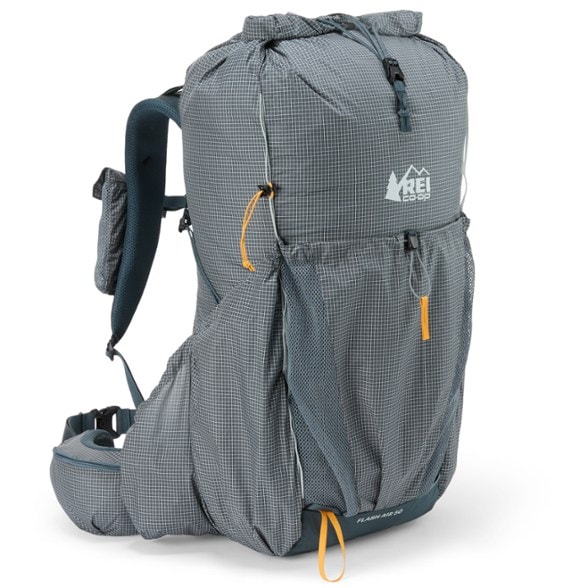
#11. REI Co-op Flash Air 50, Best Ultralight Option
The Flash Air 50 targets thru-hikers and experienced backpackers who have already reduced their gear volume and weight. Its 50L capacity encourages a more disciplined packing list.
Best for: Ultralight backpackers and efficient thru-hikers
Capacity: 50L
Frame type: Lightweight internal suspension
Recommended trip length: Overnight to 4 days
Main strength: Very low empty weight
Main tradeoff: Designed around loads up to 25 pounds
Why it works for backpacking:
The pack combines a roll-top closure, ventilated back panel, contoured hip belt, external storage, and compression with a structure intended for light loads. REI specifies comfort for loads up to 25 pounds, so the intended use is unusually clear.
It can save meaningful weight across long days when every other part of the gear list is similarly controlled.
What could be better:
The 25-pound target leaves little room for careless packing, heavy water carries, bulky food, or traditional camping equipment.
Best for this type of backpacker:
It suits experienced hikers who weigh their gear, understand their base weight, and already own compact equipment.
Who should skip it:
Beginners and anyone expecting loads above the stated range should select a more supportive frame.
Bottom line:
The Flash Air 50 is the lightest specialist here. It is rewarding with the correct load but much less forgiving than a conventional 60L or 65L backpack.
Also Read: 8 BEST Herschel Backpacks [Which Should You BUY?]
How to Choose the Best Backpacking Backpack
Choose the Right Capacity for Your Trip
Pack size should follow gear volume, not the other way around.
- 30L to 40L: Best for minimalist overnight trips with compact equipment.
- 40L to 55L: A useful range for weekend backpacking and efficient three-day packing.
- 55L to 70L: Suitable for 3 to 5 day trips, bulkier beginner gear, colder weather, or extra food.
- 70L and above: Usually reserved for winter equipment, long unsupported routes, expedition loads, or shared group gear.
A bigger pack is not automatically more versatile. Empty space often becomes an invitation to pack camp luxuries that feel harmless at home and exhausting halfway up a climb.
Lay out your actual equipment before choosing capacity. REI’s backpacking checklist provides a useful starting point for identifying the equipment that needs to fit.
Prioritize Fit Over Features
A correctly fitted simple pack is usually more comfortable than a feature-packed model in the wrong size.
Measure torso length from the prominent vertebra at the base of the neck to the line between the tops of the hip bones. Then compare that measurement with the manufacturer’s current size chart.
The shoulder straps should follow the shoulders without leaving large gaps. The hip belt should wrap the upper hips, while the load lifters should pull the upper pack toward the body. The sternum strap stabilizes the harness but should never restrict breathing.
Understand Frame and Load Support
An internal frame can use aluminum stays, perimeter rods, a frame sheet, or several elements together. These components resist pack collapse and send weight toward the hip belt.
Frameless packs can work for ultralight loads, but they depend heavily on careful packing. A badly placed cook pot or bear canister can create an uncomfortable pressure point.
According to the National Park Service’s backpacking guidance, trip planning should account for terrain, weather, distance, available water, and personal ability. Your pack support must match those same conditions.
Check the Hip Belt
The center of the hip belt should sit around the top of the hip bones. It should tighten securely without reaching the end of its adjustment range.
Look for enough padding to spread pressure, firm foam that does not immediately collapse, and a shape that follows your body. Thin webbing belts can stabilize small packs, but they do little to transfer a heavy backpacking load.
Also Read: 10 BEST Lightweight Backpacks [My TOP Picks]
Think About Pack Weight
A lighter pack saves energy, but only while it carries the load comfortably. Removing two pounds of suspension does not help when the remaining weight hangs painfully from the shoulders.
Traditional supportive packs make sense for heavy food, winter layers, camera equipment, and beginner sleep systems. Ultralight packs work best when the entire equipment list has already become lighter.
Look at Access and Organization
Top-loading packs are simple and compress well, but reaching buried equipment takes longer. Front panels or long zippers improve access while adding weight and potential failure points.
Useful trail storage may include:
- A lower sleeping bag compartment
- A removable top lid
- Hip belt pockets for snacks and navigation
- A stretch front pocket for wet layers
- Side bottle pockets
- Internal reservoir storage
- Compression straps for poles or tent components
Osprey’s packing guide recommends arranging equipment so the load remains balanced rather than simply filling every available gap.
Consider Weather Protection
Most backpacking packs are water resistant, not waterproof. Rain can enter through seams, zippers, drawcord openings, and hydration ports.
A pack cover protects much of the exterior, although wind-driven rain and water running behind the harness can still reach the pack. A waterproof liner or individual dry bags provide better protection for a sleeping bag, insulation, electronics, and dry clothes.
Match the Pack to Your Gear
A down sleeping bag and compact tent require much less space than a synthetic sleeping bag and entry-level shelter. Bear canisters, winter insulation, cooking systems, and camera cubes can also alter the required pack shape.
Shared group gear matters too. One person carrying the tent body, cooking pot, fuel, and communal food may need stronger support than a partner carrying personal equipment only.
Choose for Your Hiking Style
Beginner backpackers:
Start with an adjustable, supportive pack that forgives imperfect packing. The Trailmade 60, Atmos AG 65, and Flash 55 are reasonable places to begin.
Weekend campers:
A 40L to 55L pack may be enough once the sleep system becomes compact.
Ultralight hikers:
Prioritize low pack weight, simple storage, and a realistic load limit. The Flash Air 50 and Mariposa 60 fit this style.
Thru-hikers:
Look for low weight, easy water access, large exterior pockets, repairable components, and comfort across repetitive long days.
Winter backpackers:
Bulky insulation, stronger shelters, more fuel, traction equipment, and cold-weather sleeping bags often require 65L or more.
Photographers:
Camera equipment adds dense weight. A supportive frame and easy front access may matter more than minimal pack weight.
Backpackers carrying group gear:
Choose additional capacity and a frame capable of controlling heavier shared equipment.
People who value comfort over low weight:
The Atmos, Aura, Baltoro, Aircontact Core, and Bridger provide more substantial carrying systems.
Backpacking Pack Fit Checklist
Before keeping a new pack, load it with equipment or realistic weight and confirm:
- Torso length matches your body
- Hip belt sits securely around the upper hips
- Shoulder straps wrap comfortably without major gaps
- Load lifters pull the upper pack toward your body
- Sternum strap stabilizes the harness without restricting breathing
- Pack does not pull noticeably backward when loaded
- Hip belt pockets remain easy to reach
- Water bottles can be removed and replaced while walking
- Capacity matches your actual equipment
- Packed weight feels reasonable after walking for at least several minutes
Also Read: 11 BEST Backpacking Backpacks for Trail [My TOP Picks]
Common Mistakes When Buying a Backpacking Backpack
Buying Too Much Capacity
A large pack makes it easy to bring extra clothes, duplicate tools, oversized cooking equipment, and unnecessary camp luxuries. Those small additions quickly become several extra pounds.
Choosing a Pack Before Knowing Your Gear Volume
Buy or gather your bulky equipment first, especially the tent, sleeping bag, sleeping pad, and bear canister. Then choose a pack that fits the complete system.
Ignoring Torso Size
Total height does not determine backpack size. Incorrect torso length can leave the hip belt too high or make the shoulder straps carry more weight than intended.
Ignoring Hip Belt Comfort
A hip belt that pinches in the shop rarely improves after several steep miles. Check padding placement, buckle position, adjustment range, and whether the belt slips downward.
Buying an Ultralight Pack for Heavy Loads
A light pack can become uncomfortable when loaded beyond its intended range. Always compare your expected total trail weight with the manufacturer’s current guidance.
Choosing Poor Ventilation for Hot Trails
A close-contact panel may control weight well but feel hot. Backpackers in warm climates should compare suspended mesh, ventilation channels, and the amount of foam touching the back.
Forgetting Water Access
A bottle pocket is not truly convenient when you need to remove the pack to use it. Test access with the same bottle you expect to carry.
Ignoring Compression Straps
Partly filled packs can sway or pull backward. Proper compression keeps the contents close to the body and secures awkward equipment outside.
Not Testing the Pack With Weight
An empty pack reveals very little. Load it with your expected gear weight and walk, climb stairs, bend, and reach for the bottle pockets before deciding.
Assuming a Hiking Daypack Works for Backpacking
Most daypacks lack the volume, frame structure, hip belt, compression, and load transfer needed for overnight equipment. They may work for supported hut routes, but they are rarely suitable for a complete camping load.
Final Verdict: What Is the Best Backpacking Backpack?
The Osprey Atmos AG 65 is my best overall recommendation among the best backpacking backpacks. Its adjustable suspension, ventilation, hip belt integration, and useful trail organization suit a broad range of multi-day hikers.
The REI Co-op Trailmade 60 is the easiest recommendation for beginners and budget buyers. The Osprey Exos 58 is better for lightweight hikers, while the Gregory Baltoro 65 provides more substantial support for heavier equipment.
Women prioritizing a women-specific harness should compare the Osprey Aura AG 65. The REI Co-op Flash 55 makes particular sense for weekend trips, and the Deuter Aircontact Core 50+10 provides expandable capacity for longer trekking routes.
Choose according to fit first, expected total weight second, and features third. A pack that fits your torso and transfers weight correctly will matter far more after ten miles than an extra pocket or clever zipper.
FAQs About the Best Backpacking Backpacks
What is the best backpacking backpack for most people?
The Osprey Atmos AG 65 is the most balanced choice for many beginner and intermediate backpackers. It combines adjustable fit, substantial hip support, ventilation, compression, and multi-day capacity. However, the best pack still depends on torso length and body shape, so try it with realistic weight before purchasing.
What size backpacking backpack do I need?
A 30L to 40L pack can work for a minimalist overnight trip. Most weekend backpackers need approximately 40L to 55L, while 55L to 70L is useful for 3 to 5 days, bulky gear, or colder conditions. Measure your actual equipment volume instead of selecting capacity from trip length alone.
Is a 50L backpack enough for backpacking?
A 50L backpack is often enough for overnight and weekend backpacking when the tent, sleeping bag, and clothing pack down efficiently. It can also support longer trips with careful food planning. Beginners using bulky synthetic sleeping bags or large tents may find a 55L or 60L backpack easier to pack.
Is a 65L backpack too big?
A 65L backpack is not too big for multi-day trips, winter equipment, bulky beginner gear, or shared camping supplies. It may be excessive for a warm-weather overnight trip. Large capacity becomes a problem when it encourages unnecessary packing, so compress unused space and keep the final load controlled.
What is the difference between a hiking backpack and a backpacking backpack?
A hiking daypack generally carries water, food, rain protection, and emergency essentials for one day. A backpacking backpack holds overnight shelter, sleeping equipment, cooking gear, clothes, and several days of food. It normally has a stronger frame, supportive hip belt, load lifters, compression, and greater capacity.
Do I need an internal frame backpack for backpacking?
Most beginner and intermediate backpackers benefit from an internal frame because it stabilizes equipment and transfers weight toward the hips. A frameless pack can work for a disciplined ultralight load, but it is less forgiving. Heavy food, extra water, or bulky gear usually makes a supportive frame worthwhile.
How much weight should a backpacking backpack carry?
The correct amount depends on the specific pack, your fitness, terrain, food, and water needs. Follow the manufacturer’s stated load guidance when available. Do not assume every 60L pack carries the same weight comfortably. Leave No Trace also recommends planning carefully to avoid preventable trail problems and unnecessary impact.
Are ultralight backpacking backpacks worth it?
They can be worthwhile when your shelter, sleep system, cooking equipment, and clothing are already lightweight. An ultralight pack does not solve a heavy gear list and may carry it less comfortably. Reduce and weigh the complete load first, then select a pack designed for that realistic weight.
Should a backpacking backpack have a hip belt?
Yes, a supportive hip belt is valuable for most overnight and multi-day loads. It transfers pressure away from the shoulders and helps control movement on uneven trails. A thin webbing belt may stabilize a small pack, but it cannot replace a structured, properly fitted hip belt when carrying heavier camping gear.
Can I use a travel backpack for backpacking?
A travel backpack may work for short walks to a campsite, but most lack the ventilation, shaped hip belt, torso adjustment, frame support, bottle access, and external attachments needed for long trail days. For regular hiking and camping, a purpose-built backpacking pack will usually manage the load more comfortably and securely.
![7 BEST Kids Backpacks for School [My TOP Picks]](https://thebloggingtraveller.net/wp-content/uploads/2026/07/ChatGPT-Image-Jul-16-2026-10_37_09-PM-1-768x432.png)
![10 BEST Budget Travel Backpacks [My TOP Picks]](https://thebloggingtraveller.net/wp-content/uploads/2026/07/ChatGPT-Image-Jul-17-2026-10_24_30-AM-1-1-768x432.png)
![8 BEST Hiking Backpacks for Men [My TOP Picks]](https://thebloggingtraveller.net/wp-content/uploads/2026/07/ChatGPT-Image-Jul-19-2026-11_01_12-PM-1-768x432.png)