
8 BEST Hiking Backpacks for Men [My TOP Picks]
![8 BEST Hiking Backpacks for Men [My TOP Picks]](https://thebloggingtraveller.net/wp-content/uploads/2026/07/ChatGPT-Image-Jul-19-2026-11_01_12-PM-1-1024x576.png)
Best Hiking Backpacks for Men: 8 Comfortable Trail Picks
The best hiking backpacks for men are not simply the biggest packs with the thickest straps. I look first at fit, because a pack that sits cleanly against one person’s back can rub, bounce, or drag on another. That matters far more after the first steep mile than it does while browsing product photos.
A normal backpack may feel fine around town, but water, lunch, a rain jacket, spare layers, a first aid kit, camera gear, and trekking accessories quickly expose weak straps and a sweaty flat back panel. I have also learned to value small practical details, such as bottle pockets I can reach without removing the pack and a sternum strap that stops the load wandering on uneven ground.
This guide compares eight current options for different hiking styles. I considered torso adjustment, shoulder and hip support, ventilation, hydration storage, usable capacity, trail access, and the compromises that become noticeable once a pack is loaded.
A pack labeled for men is not automatically the right answer. The right harness for your body is.
Quick Trail Picks for Men
- Best Overall: Osprey Talon 22, for its close-moving harness and versatile trail layout.
- Best Day Hiking Backpack: REI Co-op Trail 25, for practical storage, broad sizing, and an included rain cover.
- Best Lightweight Option: Deuter Speed Lite 21, for keeping the empty pack from consuming the load budget.
- Best for Hydration: CamelBak Rim Runner X22, because the reservoir is already included.
- Best for Hot Weather: Gregory Zulu 30, for its ventilated suspension and supportive trail fit.
- Best for Long Hikes: Osprey Stratos 36, for stronger load support and excellent airflow.
- Best Budget Option: Quechua MH500 25L, for a serious harness at a comparatively accessible price.
- Best Trail and Travel Option: Patagonia Terravia 22L, for its clean shape, breathable carry, and useful pockets.
- Best for Light Overnight Trips: Osprey Stratos 36, when the kit is compact and the trip is genuinely light.
What Makes a Hiking Backpack Good for Men?
“Men’s” usually describes harness geometry and sizing rather than establishing a rule about who may wear the backpack. Torso length, shoulder-strap shape, hip-belt range, and weight distribution matter more than the label.
A unisex backpack can fit one man perfectly and feel completely wrong on another.
I start by checking whether the harness places the hip belt over the hip bones without leaving a large gap around the shoulders. Osprey’s backpack-fitting guide explains why torso measurement, rather than overall height, provides the more useful starting point.
Tall men can have comparatively short torsos, while shorter men can have surprisingly long ones.
The shoulder straps should wrap around the body without pinching the neck or cutting into the outer shoulders. Padding helps, but shape and placement are more important than thickness alone.
A sternum strap should then control side-to-side movement. I want it tight enough to stabilize the load without dragging both shoulder straps uncomfortably inward.
For heavier water, food, and spare layers, a padded hip belt becomes important. It should hold the backpack against the pelvis and move part of the load away from the shoulders.
Ventilation is the other major comfort issue. Foam channels allow some air movement, while suspended mesh creates a larger air gap. Suspended panels generally feel cooler, but they can position the load slightly farther away from the body.
Finally, the backpack must remain functional while I am walking. I look for a hydration sleeve or reachable bottle pockets, somewhere to stuff a damp jacket, secure storage for keys, and pockets that remain usable when the main compartment is full.
Durable fabric matters around rocks and branches, but unnecessary weight follows you up every climb.
Best Hiking Backpacks for Men: Ranked Picks

1. Osprey Talon 22, Best Overall
The Osprey Talon 22 strikes the balance I want from an all-purpose men’s hiking daypack. It feels technical without becoming an oversized expedition pack, while its close-to-body suspension is designed to move naturally with the torso.
- Best for: Active day hikers, scramblers, and mixed outdoor use
- Capacity: 22L
- Hydration compatible: Yes
- Hip belt: Padded with pockets
- Main strength: Stable and responsive carry
- Main tradeoff: The body-hugging back panel is not the airiest design here
Why It Works Well for Men’s Hiking Use
What appeals to me most is how the Talon 22 prioritizes movement.
A flexible and close-fitting harness usually feels less like a box strapped to my back when I am stepping over rocks or leaning forward into a climb. The padded hip wings provide real control, while their pockets keep snacks or small accessories within reach.
The 22L capacity is also sensible for most day hikes. It holds a normal trail load without leaving a large empty cavity that encourages me to pack “just in case” items that never leave the bag.
Bottle storage, hydration compatibility, compression straps, and external attachment points make the backpack adaptable without covering it in unnecessary straps.
What Could Be Better
The close-fitting back panel will generally trap more warmth than a suspended mesh system.
Hikers who sweat heavily in hot conditions may prefer the increased airflow of the Gregory Zulu 30 or Osprey Stratos 36, even if that means accepting slightly more space between the load and their back.
The Talon also looks and carries like a proper trail backpack, so it is less understated for everyday city use.
Best for This Type of Hiker
It suits hikers who want one technical daypack for regular trails, fast climbs, cycling, or occasional scrambling.
The adjustable fit is particularly useful because it lets me fine-tune the harness instead of hoping a fixed back length happens to match.
Who Should Skip It
Skip it when maximum back ventilation, overnight capacity, or the lowest possible empty weight is your main priority.
Bottom Line
The Osprey Talon 22 is my best overall choice because it combines useful capacity, dependable load control, and a harness that feels designed for movement rather than simple storage.

2. REI Co-op Trail 25, Best Day Hiking Backpack
The REI Co-op Trail 25 feels refreshingly practical. Its current version offers 25L of space, hydration compatibility, plenty of usable access, and an included rain cover without pushing the design into specialist territory.
- Best for: Regular day hikes, beginners, and hikers wanting flexible sizing
- Capacity: 25L
- Hydration compatible: Yes
- Hip belt: Padded
- Main strength: Versatile layout and inclusive size options
- Main tradeoff: Heavier than minimalist daypacks
Why It Works Well for Men’s Hiking Use
This is the kind of backpack I can load without playing gear Tetris.
Twenty-five liters gives a rain jacket, fleece, lunch, first aid kit, water, and compact camera enough space to coexist without making everything frustratingly difficult to reach.
The external pockets keep frequently used gear from disappearing underneath spare clothes. I can place snacks, gloves, or a trail map somewhere accessible rather than opening the entire main compartment whenever I need something small.
The current size selection is another major advantage. Men do not all share one torso or waist range, so broader sizing creates a much better chance of finding a meaningful fit.
The included rain cover also removes one small purchase from the hiking setup, although sensitive equipment should still be placed inside a waterproof liner or dry bag.
What Could Be Better
Its structure and collection of features add weight compared with the Deuter Speed Lite 21.
Minimalists may see several pockets where they would prefer one lightweight compartment. It also lacks the close-fitting and athletic personality of the Osprey Talon 22.
Best for This Type of Hiker
The Trail 25 is an easy recommendation for someone building a first proper hiking setup.
It also works well for a regular walker who wants one comfortable backpack for local trails, long day hikes, and occasional travel.
Who Should Skip It
Fast hikers counting every gram should choose the Deuter Speed Lite 21.
Anyone carrying shelter, sleeping equipment, and overnight supplies will need more capacity and stronger load support.
Bottom Line
The REI Co-op Trail 25 is not exciting simply for the sake of being exciting. It covers more everyday hiking needs than most people realize they have.
3. Gregory Zulu 30, Best for Hot Weather
The Gregory Zulu 30 is the step up I would consider when a regular daypack begins to feel overloaded. Its ventilated suspension and adjustable men’s fit target long, warm trail days where airflow and weight transfer both matter.
- Best for: Hot-weather hikes, long trail days, and carrying extra gear
- Capacity: 30L
- Hydration compatible: Yes
- Hip belt: Padded with pockets
- Main strength: Ventilated and supportive suspension
- Main tradeoff: Bulkier and more complicated than a lightweight daypack
Why It Works Well for Men’s Hiking Use
The first thing I notice about this style of suspension is the separation between the backpack and my back.
That space cannot completely prevent sweat, but it lets heat escape more effectively than a flat foam panel. The adjustable torso and supportive hip belt also give water, food, and cold-weather layers somewhere to settle besides directly on the shoulders.
At 30L, there is enough room for photography equipment or family supplies without immediately entering full overnight-backpack territory.
Compression also matters at this size. The straps can pull a partially filled load inward and reduce the sloppy backward tug that makes larger daypacks annoying.
What Could Be Better
Suspended backpacks can feel slightly farther away from the body, particularly during scrambling or fast directional changes.
Thirty liters can also encourage overpacking, while the frame, supportive belt, and ventilation structure are unnecessary for a short park loop.
Best for This Type of Hiker
Choose the Zulu 30 for long, warm hikes, mountain weather requiring additional layers, or days when you regularly carry more water and equipment than a 20L pack can manage comfortably.
Who Should Skip It
Minimalists, trail runners, and hikers who mainly take short local walks should choose something smaller and lighter.
Bottom Line
The Gregory Zulu 30 earns its place through comfort under a fuller load rather than compactness. It makes the most sense when the trail day is long enough to use that support.

4. Deuter Speed Lite 21, Best Lightweight Hiking Backpack
The Deuter Speed Lite 21 removes many of the extras I do not need during a light trail day. Deuter lists it at 470 grams, with a body-hugging Lite back system, perforated shoulder straps, and a removable waist belt.
- Best for: Fast hiking and disciplined packers
- Capacity: 21L
- Hydration compatible: Yes
- Hip belt: Removable webbing belt
- Main strength: Low weight and clean movement
- Main tradeoff: Limited load transfer for heavy gear
Why It Works Well for Men’s Hiking Use
I like that this backpack does not ask me to carry a heavy harness before adding water and equipment.
Its close-fitting shape should remain tidy while moving quickly, while the perforated shoulder straps make sense during energetic climbs. A front pocket and two side pockets provide enough separation without filling the interior with tiny organizers.
The 21L volume naturally encourages restraint. For a warm hiking day with water, food, a rain shell, first aid supplies, and navigation, that can feel freeing.
The removable waist strap helps control bouncing, but it does not pretend to be a padded, load-bearing hip belt.
What Could Be Better
Load it with several liters of water, a large camera, and winter layers, and the simple harness will reach its comfortable limit sooner than the Osprey Talon or Gregory Zulu.
The close back panel may also become warm, while the minimalist layout provides fewer dedicated places for small accessories.
Best for This Type of Hiker
It is ideal for someone who moves quickly, packs carefully, and understands the difference between essential safety gear and nervous overpacking.
Who Should Skip It
Choose another backpack when you regularly carry heavy photography equipment, supplies for children, or bulky cold-weather clothing.
Bottom Line
The Deuter Speed Lite 21 makes every uphill step feel slightly less wasteful, provided the load remains as disciplined as the backpack.
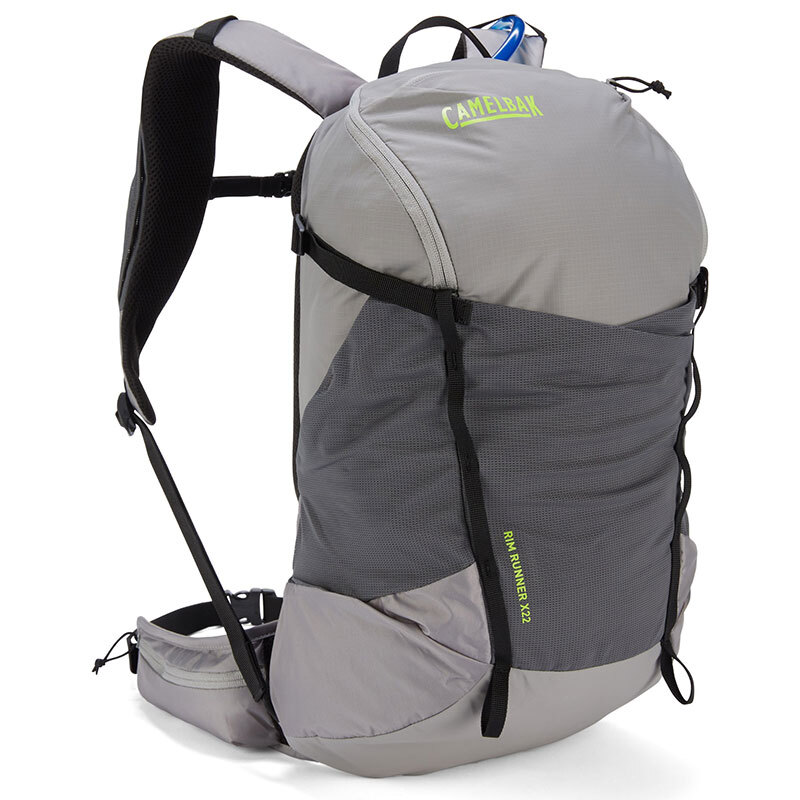
5. CamelBak Rim Runner X22, Best for Hydration
The CamelBak Rim Runner X22 removes the uncertainty from building a hydration system because it includes a 1.5L Crux reservoir. It combines that drink-on-the-move setup with 22L of equipment space for a genuine day hike.
- Best for: Hikers who forget to drink or dislike reaching for bottles
- Capacity: 22L plus a 1.5L reservoir
- Hydration compatible: Yes, with reservoir included
- Hip belt: Padded with pockets
- Main strength: Ready-to-use hydration system
- Main tradeoff: The reservoir requires cleaning and occupies internal space
Why It Works Well for Men’s Hiking Use
The biggest advantage is behavioral.
When the hydration tube is already positioned near my shoulder, drinking becomes a quick reflex instead of a small stop I repeatedly postpone. That can be particularly useful during steep climbs or group hikes where nobody wants to pause every ten minutes.
The backpack still provides room for normal trail essentials, while the padded hip belt helps manage the dense weight of water.
The REI hydration-pack guide is useful because it explains how reservoir size, equipment capacity, and total water weight affect the hiking experience.
What Could Be Better
A hydration bladder is harder to monitor than a clear bottle and takes longer to clean and dry.
It can also feel awkward to refill when the main compartment is tightly packed. Some hikers dislike the taste, tube management, or maintenance routine.
A 1.5L water supply may be insufficient in extreme heat or on longer trails, depending on refill availability and individual requirements.
Best for This Type of Hiker
The Rim Runner X22 suits hikers who want frequent hands-free sips and prefer buying a complete hydration setup rather than matching a separate reservoir to a backpack.
Who Should Skip It
Bottle loyalists and hikers who dislike cleaning hydration hoses should choose a conventional pack with excellent side-pocket access.
Bottom Line
The CamelBak Rim Runner X22 is the easiest hydration-first choice here, but its reservoir still requires the same planning and care as the rest of the hiking kit.

6. Patagonia Terravia 22L, Best for Hiking and Travel
The Patagonia Terravia 22L has a cleaner and quieter appearance than many technical daypacks. Underneath that simple shape, it includes a breathable raised back, airmesh shoulder straps, hydration compatibility, a hip belt with pockets, and a rain cover.
- Best for: Day hikes, walking trips, and understated carry
- Capacity: 22L
- Hydration compatible: Yes
- Hip belt: Padded with pockets
- Main strength: Clean design without sacrificing essential trail features
- Main tradeoff: Limited space for bulky cold-weather loads
Why It Works Well for Men’s Hiking Use
I appreciate a trail backpack that does not look as though it is leaving for base camp every time I enter a café.
The 22L shape remains manageable, while the top and front pockets keep smaller items accessible. The raised back panel and breathable strap surfaces are also sensible during warm walking days.
The hip-belt pockets are more than decoration. Snacks, lip balm, or a small phone can remain accessible without removing the backpack.
The recycled nylon ripstop exterior with a polyurethane coating provides useful trail durability and water resistance, although it does not make the bag completely waterproof.
What Could Be Better
Twenty-two liters fills quickly when a thick fleece, insulated jacket, and camera cube enter the equation.
Buyers wanting extensive torso adjustment should compare the exact available fit carefully instead of assuming the streamlined harness will accommodate every torso.
Best for This Type of Hiker
It works for hikers who divide their time between trails, travel, and everyday walking, particularly those who prefer a neat backpack over a highly aggressive technical appearance.
Who Should Skip It
Skip it for gear-heavy winter hiking or unusually long torsos unless the actual loaded fit works comfortably.
Bottom Line
The Patagonia Terravia 22L provides a thoughtful middle ground. It is properly trail-ready, visually calm, and easy to live with away from the trailhead.

7. Quechua MH500 25L, Best Budget Hiking Backpack
The Quechua MH500 25L is compelling because its budget positioning does not reduce it to a floppy sack. Its padded shoulder straps and hip belt are designed to distribute weight, making it a more serious hiking option than many inexpensive everyday backpacks.
- Best for: Beginners and value-focused day hikers
- Capacity: 25L
- Hydration compatible: Yes
- Hip belt: Padded
- Main strength: Supportive trail features for the money
- Main tradeoff: Less refined materials and detailing
Why It Works Well for Men’s Hiking Use
The harness is what makes this backpack interesting.
Once water and food are packed, a proper hip belt and shaped shoulder straps matter more to me than a fashionable logo. The 25L capacity is also forgiving enough for beginners who have not yet perfected a compact hiking list.
Its pocketing and trail attachments cover the normal routine of carrying water, snacks, layers, and trekking poles.
That makes it a useful first hiking backpack rather than a cheap bag that must be replaced as soon as walking distances increase.
What Could Be Better
Budget backpacks often feel less polished around the buckles, zipper pulls, fabric surfaces, and pocket shaping.
That does not automatically make them unreliable, but the tactile experience may not match the more expensive choices. Availability and exact specifications may also vary between countries.
Best for This Type of Hiker
It is best for beginners who want proper support before spending premium money.
It also suits occasional hikers who would rather reserve more of their budget for footwear, clothing, and weather protection.
Who Should Skip It
Fast hikers chasing the lowest possible weight, or frequent users who care deeply about refined harness movement, should compare the Osprey Talon and Deuter Speed Lite.
Bottom Line
The Quechua MH500 25L puts money into the parts that matter while hiking. It may not feel luxurious, but it is much closer to a real trail tool than a basic school-style backpack.
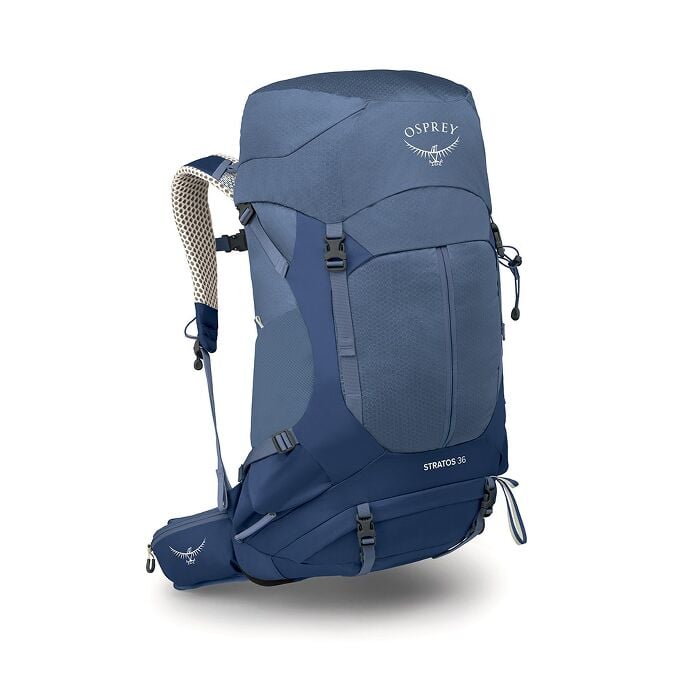
8. Osprey Stratos 36, Best for Long Hikes and Light Overnights
The Osprey Stratos 36 is the largest and most supportive backpack in this roundup. Its adjustable men’s fit, AirSpeed suspended back panel, integrated rain cover, and divided storage suit long day hikes and carefully packed overnight trips.
- Best for: Long hikes, bulky layers, and lightweight overnight setups
- Capacity: 36L
- Hydration compatible: Yes
- Hip belt: Padded with pockets
- Main strength: Excellent ventilation and load support
- Main tradeoff: Too heavy and bulky for simple day hikes
Why It Works Well for Men’s Hiking Use
This is where a substantial harness begins earning its weight.
The suspended panel creates excellent airflow, while the padded hip belt and adjustable torso give a fuller load somewhere stable to sit.
I also appreciate divided access when spare clothing or overnight equipment would otherwise settle into one deep column.
The extra capacity is useful for cold-weather hiking, supplies for children, camera gear, or a compact sleeping system. Its integrated rain cover is reassuring, although electronics and sleeping insulation still deserve waterproof protection inside the pack.
What Could Be Better
The frame and suspended back panel position the backpack farther away from the body and increase its empty weight.
On a short summer hike, that feels like carrying a solution to a problem that never arrives.
Thirty-six liters also makes it easy to pack through anxiety rather than actual need.
Best for This Type of Hiker
Choose the Stratos 36 for long trail days with changing mountain weather, bulky camera or family loads, and minimalist overnight trips where 36L is genuinely enough.
Who Should Skip It
Most casual day hikers will be happier with a 20L to 25L backpack.
It is also not a substitute for a larger backpacking pack when shelter, sleeping gear, food, and cold-weather equipment exceed its practical capacity.
Bottom Line
The Osprey Stratos 36 is the comfort-first option for bigger days. Its additional support feels excellent when used, but wasteful when the load is light.
How to Choose the Best Hiking Backpack for Men
Start With Fit, Not Features
Measure your torso from the prominent vertebra at the base of the neck to the imaginary line running across the top of the hip bones.
Overall height does not provide this measurement.
REI’s backpack sizing and fit guide provides a helpful overview of capacity, torso fit, frame design, and harness features.
Load the backpack before judging it. An empty bag can hide pressure points and poor weight distribution.
Fasten the hip belt over the hip bones, tighten the shoulder straps, adjust the load lifters when present, and set the sternum strap last.
The backpack should feel connected to your body without restricting normal movement or breathing.
Also Read: 11 BEST Travel Backpacks in 2026 [Ranked & Compared]
Choose the Right Capacity
10L to 18L
This range works for short hikes and minimal warm-weather trail days.
18L to 25L
This is enough for most day hikes with water, lunch, emergency supplies, and an additional clothing layer.
25L to 35L
Choose this range for long days, cold conditions, photography equipment, or supplies carried for other people.
35L to 45L
This size works for light overnights or unusually equipment-heavy hikes.
Bigger is not automatically safer. Excess space encourages unnecessary weight, while too little capacity leads to overstuffed pockets and loose equipment hanging outside.
I prefer laying out my actual hiking kit before choosing a backpack capacity.
Check the Shoulder Straps
Look beyond softness.
The straps should follow the chest and shoulders without rubbing the neck, creating a hard edge near the armpit, or leaving a large gap above the shoulder.
Wider padding distributes pressure, but an overloaded soft backpack can still become painful because the weight has nowhere else to go.
Look for a Useful Hip Belt
A webbing belt mainly controls bouncing on a small backpack. A padded hip belt transfers meaningful weight when carrying a heavier load.
The padding should wrap around the hip bones instead of ending behind them. The buckle should also retain enough adjustment to fit over a T-shirt or additional winter layers.
Prioritize Back Panel Ventilation
Foam channels provide modest airflow and keep the load close to the body.
Suspended mesh creates a larger air gap but holds the weight slightly farther away.
For hot and steady hiking, I lean toward increased ventilation. For scrambling and fast directional changes, I prefer a closer and more stable harness.
Think About Hydration
A hydration bladder makes frequent sipping easy, while bottles make the remaining water easier to see and refills easier to manage.
Check the route, weather, refill locations, and personal consumption instead of depending on one universal recommendation.
Water is heavy and dense, so its position inside the backpack also affects balance.
Check the Pocket Layout
I want bottle pockets I can reach, one quick-access pocket for navigation and snacks, and a stretch pocket for a damp jacket.
Hip-belt pockets are genuinely useful.
Ten tiny internal organizers normally provide less value while hiking than one open compartment that can accommodate a jacket.
Also Read: 10 BEST Backpacks for College [My TOP Picks]
Consider Weather Resistance
Water-resistant fabric slows moisture. It does not make a hiking backpack waterproof.
Stitching and zippers remain potential entry points. A rain cover protects the exterior, but it can leave the harness exposed and may struggle in strong wind.
REI’s wet-weather hiking guidance explains how backpack protection fits into broader rain preparation.
I still use a waterproof liner or dry bags for insulation, electronics, and emergency clothing.
Match the Backpack to Your Trail Style
Short Local Hikes
Use a small and lightweight backpack, but continue carrying safety equipment appropriate for the route.
Long Day Hikes
Prioritize fit, water capacity, accessible food storage, and proper weight distribution.
Mountain Trails
Choose stability, compression straps, weather protection, and enough room for changing clothing layers.
Hot-Weather Hiking
Look for back panel ventilation, breathable shoulder straps, and easy access to water.
Rainy Climates
Use a rain cover or internal liner and protect essential equipment separately.
Photography Hikes
Leave enough capacity for the camera insert and keep dense equipment close to the back.
Hiking With Children
Expect to carry additional water, snacks, clothing, and supplies for small emergencies.
Light Overnight Trips
Confirm that your shelter, sleeping equipment, food, and insulation genuinely fit before choosing a 35L to 45L backpack.
Travel and Hiking
Look for a clean exterior and manageable size, but do not sacrifice loaded comfort simply for airport styling.
Before beginning any route, I check the conditions and carry essentials appropriate to the location. Leave No Trace advises hikers to plan ahead and prepare, including preparing for difficult weather, hazards, and emergencies.
Men’s Hiking Backpack Fit Checklist
- Torso length matches the backpack’s harness range.
- Shoulder straps wrap naturally without digging into the body.
- Hip belt sits over the hip bones instead of around the stomach.
- Sternum strap stabilizes the load without restricting breathing.
- Back panel does not create hard or painful pressure points.
- Backpack does not sway while walking, bending, or stepping upward.
- Water remains accessible without unpacking the bag.
- Main equipment fits without forcing the zipper.
- Dense items remain close to the back.
- The complete load feels balanced.
- Straps retain enough adjustment for different clothing layers.
REI’s backpack-loading guide is worth checking after finding the correct fit. A well-designed bag can still carry poorly when dense equipment sits too far from the back or the load shifts from side to side.
Also Read: 9 BEST Backpacks for Sports and Gym [My TOP Picks]
What Size Hiking Backpack Should Men Choose?
Small Daypacks: 10L to 18L
These suit short, warm-weather hikes with water, snacks, a compact rain jacket, first aid supplies, a headlamp, navigation, and small emergency items.
A bulky fleece or camera can quickly consume the remaining space.
Regular Hiking Daypacks: 18L to 25L
This is the practical sweet spot for most hikers.
It can hold water or a hydration reservoir, lunch, a rain jacket, fleece, first aid kit, headlamp, and compact camera.
External loops may also carry trekking poles when the trail becomes easier.
Large Daypacks: 25L to 35L
Use this range for winter clothing, long mountain hikes, photography equipment, or gear carried for children.
Compression straps help stabilize the backpack when it is not completely full.
Light Overnight Packs: 35L to 45L
This size can accommodate a compact shelter, sleeping equipment, food, spare clothes, water treatment, and cooking supplies.
It requires efficient equipment and honest planning. The backpack must support the resulting weight rather than merely containing its volume.
Whatever size you choose, build the contents around the route rather than the bag.
The National Park Service Ten Essentials provides a strong safety framework covering navigation, sun protection, insulation, illumination, first aid, fire, repairs, food, water, and emergency shelter.
Common Mistakes Men Make When Buying a Hiking Backpack
Buying Based Only on Appearance
A rugged shape and earthy color do not create trail comfort.
Load transfer, pocket access, and proper fit are rarely obvious in product photographs.
Choosing Too Much Capacity
Unused capacity adds bulk and encourages unnecessary packing.
Buy for your typical outing instead of the most extreme imaginary trip.
Ignoring Torso Fit
Overall height cannot accurately predict torso length.
A hip belt cannot transfer weight properly when the backpack harness is too long or too short.
Ignoring Back Ventilation
No back panel completely eliminates sweat, but the difference between flat padding and suspended mesh becomes obvious in warm conditions.
Buying Without Enough Water Storage
Check bottle diameter, reservoir capacity, refill locations, and whether water remains reachable.
“Hydration compatible” does not mean the reservoir is included with the backpack.
Choosing Weak Shoulder Straps for Heavy Loads
Soft padding may feel pleasant for five minutes and painful after two hours.
Heavier loads require structure and hip support rather than simply adding more foam.
Skipping the Hip Belt on Longer Hikes
A simple belt controls movement, while a padded belt transfers weight.
Several liters of water and camera equipment make that distinction noticeable very quickly.
Assuming Any Backpack Can Work for Hiking
A school or laptop backpack can survive an easy walk, but poor ventilation, inaccessible bottle storage, and weak stabilization become frustrating on real trails.
Forgetting Rain Protection
Coated fabric does not provide the same protection as waterproof construction.
Keep essential dry clothing and electronics protected inside the backpack.
Not Testing the Backpack With Weight
Add the expected trail load, walk up some stairs, bend forward, and reach around your body.
Ten loaded minutes reveal more than half an hour spent inspecting an empty backpack.
Final Verdict: What Is the Best Hiking Backpack for Men?
The Osprey Talon 22 is my best overall hiking backpack for men because it balances stable movement, practical trail storage, adjustable fit, and manageable capacity.
The REI Co-op Trail 25 is the easiest all-purpose day-hiking choice, while the Deuter Speed Lite 21 suits fast hikers who keep their load genuinely light.
Choose the CamelBak Rim Runner X22 when integrated hydration matters most.
The Gregory Zulu 30 is my hot-weather and long-day choice because its supportive, ventilated suspension earns its additional bulk under a fuller load.
The Quechua MH500 25L offers the strongest value proposition, while the Patagonia Terravia 22L works well for people who want a cleaner backpack for both trails and travel.
Finally, the Osprey Stratos 36 is the supportive and rugged choice for bigger trail days or carefully packed overnight trips.
The final decision should happen with weight inside the backpack. Product labels and rankings can narrow the field, but the harness that sits naturally on your own torso ultimately wins.
FAQs About the Best Hiking Backpacks for Men
What Is the Best Hiking Backpack for Men?
The Osprey Talon 22 is the best all-purpose option in this guide because it balances capacity, stability, torso adjustment, hydration compatibility, and accessible trail storage. Men who hike in intense heat, carry heavy photography equipment, or pack overnight gear may need a more ventilated or larger backpack.
What Size Hiking Backpack Is Best for Men?
Most day hikers are well served by 18L to 25L. Short warm-weather walks may need only 10L to 18L, while long hikes with cold-weather clothing or photography gear often justify 25L to 35L. Lightweight overnight setups commonly require 35L to 45L, depending on how compact the equipment is.
Are Men’s Hiking Backpacks Different From Women’s Hiking Backpacks?
They can differ in torso ranges, shoulder-strap curves, hip-belt shapes, and harness proportions. These are design starting points rather than strict rules. A man may fit a unisex or women-specific pack better. Use torso and hip measurements, then test the loaded backpack instead of choosing by gender label alone.
Do Men Need a Hip Belt on a Hiking Backpack?
Not always. A lightweight 10L backpack may only need a basic webbing belt to control bouncing. As water, food, layers, and camera equipment increase, a padded hip belt becomes valuable because it transfers weight from the shoulders to the pelvis and stabilizes the load on uneven ground.
Is a 20L Backpack Enough for Hiking?
Yes, a 20L backpack is enough for many day hikes when the weather is mild and the equipment is compact. It should hold water, food, navigation, first aid supplies, a headlamp, rain protection, and a light layer. Winter insulation, family supplies, or a camera cube may require 25L to 35L.
What Should Men Carry in a Hiking Backpack?
Carry equipment appropriate for the route, including navigation, water, extra food, sun protection, insulation, rain protection, first aid supplies, illumination, emergency shelter, and repair or fire-starting tools where appropriate. Add personal medication and route-specific equipment. Do not let a short distance create false confidence when weather or terrain can change.
Are Hydration Backpacks Better for Hiking?
Hydration backpacks make small and frequent sips easier because the hose remains near the shoulder. Bottles are simpler to refill, clean, share, and monitor. Neither system is universally better. Choose according to route length, refill access, backpack layout, and whether convenient drinking outweighs the additional cleaning required by a reservoir.
Can Men Use a Regular Backpack for Hiking?
A regular backpack can work for a short and easy walk with a light load. It becomes less suitable when poor ventilation, weak straps, no sternum or hip belt, and awkward water access begin affecting comfort. For longer, steeper, hotter, or more remote routes, a purpose-built hiking daypack is more practical.
What Is the Best Lightweight Hiking Backpack for Men?
The Deuter Speed Lite 21 is the best lightweight hiking backpack for men in this roundup. Its low empty weight and close carry suit fast day hikes, but the simple waist belt provides less weight transfer than a padded hiking belt. Keep the load modest or choose the Osprey Talon 22 for more support.
How Should a Hiking Backpack Fit?
The harness should match your torso length, the hip belt should wrap around the hip bones, and the shoulder straps should follow your body without gaps or pinching. The sternum strap should stabilize the backpack without restricting breathing. Once loaded, the bag should remain balanced without swaying, jabbing, or pulling sharply backward.
![10 BEST Lightweight Backpacks [My TOP Picks]](https://thebloggingtraveller.net/wp-content/uploads/2026/07/ChatGPT-Image-Jul-20-2026-11_28_18-PM-768x432.png)
![9 BEST Backpacks for Sports and Gym Gear [2026]](https://thebloggingtraveller.net/wp-content/uploads/2026/07/ChatGPT-Image-Jul-15-2026-10_11_57-PM-1-1-768x432.png)
![10 BEST Budget Travel Backpacks [My TOP Picks]](https://thebloggingtraveller.net/wp-content/uploads/2026/07/ChatGPT-Image-Jul-17-2026-10_24_30-AM-1-1-768x432.png)
![8 BEST Herschel Backpacks [Which Should You BUY?]](https://thebloggingtraveller.net/wp-content/uploads/2026/07/ChatGPT-Image-Jul-21-2026-06_38_55-PM-1-768x432.png)