
10 BEST Lightweight Backpacks [My TOP Picks]
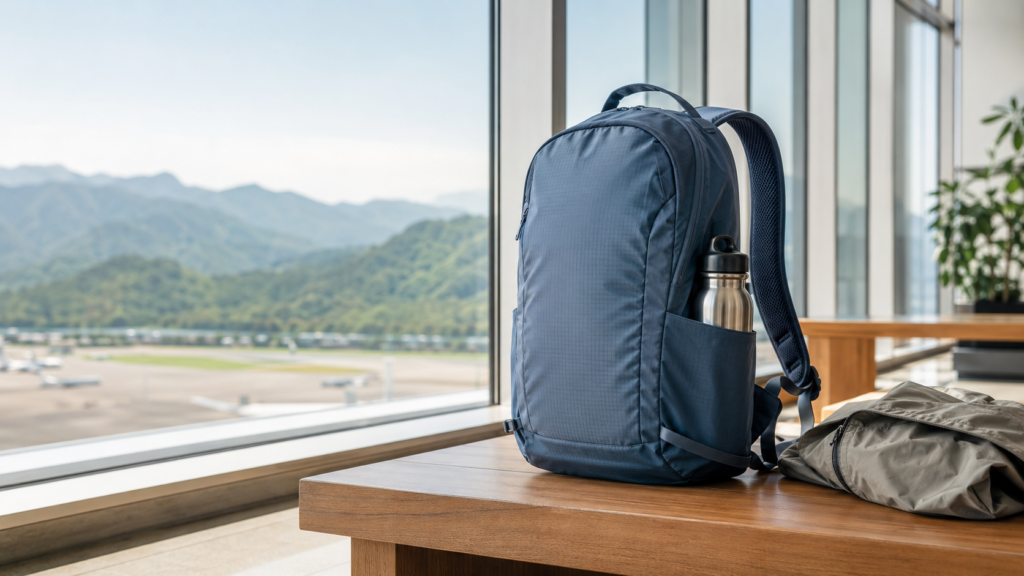
Best Lightweight Backpacks for Travel, Work, and Everyday Carry
I love the idea of carrying a lighter backpack. There is something satisfying about walking through an airport, commuting across town, or climbing a trail without feeling as though the bag is dragging my shoulders backward.
However, I would never choose a backpack simply because it weighs the least.
A paper-thin bag can feel wonderful while empty and surprisingly miserable after I add a water bottle, charger, jacket, and laptop. Thin shoulder straps begin digging in, the back panel collapses, and everything collects in an awkward lump near the bottom.
The best lightweight backpack balances low weight with comfortable straps, sensible storage, reliable fabric, and enough structure to manage its intended load.
Some people need a packable backpack that disappears inside their luggage. Others need laptop protection for work, bottle storage for hiking, or enough room for personal item travel.
This guide compares ten lightweight backpacks across travel, commuting, hiking, work, and simple everyday carry.
Quick Picks: Best Lightweight Backpack Options
- Best Overall: Aer Go Pack 2, for its useful pockets and packable yet practical design.
- Best for Travel: Bellroy Lite Travel Pack 30L, for lightweight carry-on packing.
- Best for Everyday Carry: Osprey Daylite, for errands, short hikes, and casual travel.
- Best Lightweight Laptop Backpack: Patagonia Refugio Daypack 26L, for its removable padded tech sleeve.
- Best Packable Backpack: Matador ReFraction, for excellent packability without completely abandoning comfort.
- Best for Hiking: Deuter Speed Lite 21, for its close fit and trail-focused harness.
- Best Budget Option: REI Co-op Flash 22, for useful hiking features at a reasonable price.
- Best Minimalist Option: Bellroy Lite Daypack, for its clean appearance and lightweight construction.
- Best Personal Item Backpack: Cotopaxi Batac 24L, for flexible storage and low empty weight.
What Makes a Lightweight Backpack Worth Buying?
A good lightweight backpack should feel deliberately simplified rather than cheaply stripped down.
Low empty weight
Empty weight matters because every gram of the backpack reduces how much clothing, technology, food, or water I can carry before the complete load becomes uncomfortable.
However, I look at weight alongside capacity. A 225g packable daypack and a 30L travel backpack serve completely different purposes.
Comfortable shoulder straps
Straps are usually where lightweight designs reveal their compromises.
Thin webbing saves weight but can create pressure when the bag is loaded. I prefer straps with enough width to spread the load, even when the padding remains relatively thin.
Enough structure for the intended load
A packable bag does not need the stiffness of a commuter backpack. It should still stop a water bottle or charger from pressing directly into my back.
For laptop carry, I want considerably more structure and padding.
Useful pockets without unnecessary complexity
Every zipper, divider, and buckle adds weight. The smartest lightweight backpacks use a few well-positioned pockets instead of filling the interior with tiny sleeves.
I generally want:
- One quick-access pocket
- At least one bottle pocket
- A simple internal sleeve
- Enough open space for clothing or packing cubes
- Secure storage for keys and small valuables
Also Read: 11 BEST Travel Backpacks in 2026 [Ranked & Compared]
Durable fabric for the weight
Light fabric is not automatically weak. Ripstop construction, reinforced stitching, dependable zippers, and thoughtful stress-point reinforcement can make a lightweight bag surprisingly durable.
Water resistance also matters, but it should not be confused with waterproofing. Unless the manufacturer specifically confirms waterproof construction, I would still protect electronics during heavy rain.
Realistic comfort when loaded
This is the deciding factor.
A slightly heavier bag with shaped straps and a supportive back panel may feel lighter on my shoulders than an ultralight sack carrying the same equipment. Empty specifications tell only half the story.
Best Lightweight Backpack: Ranked Picks
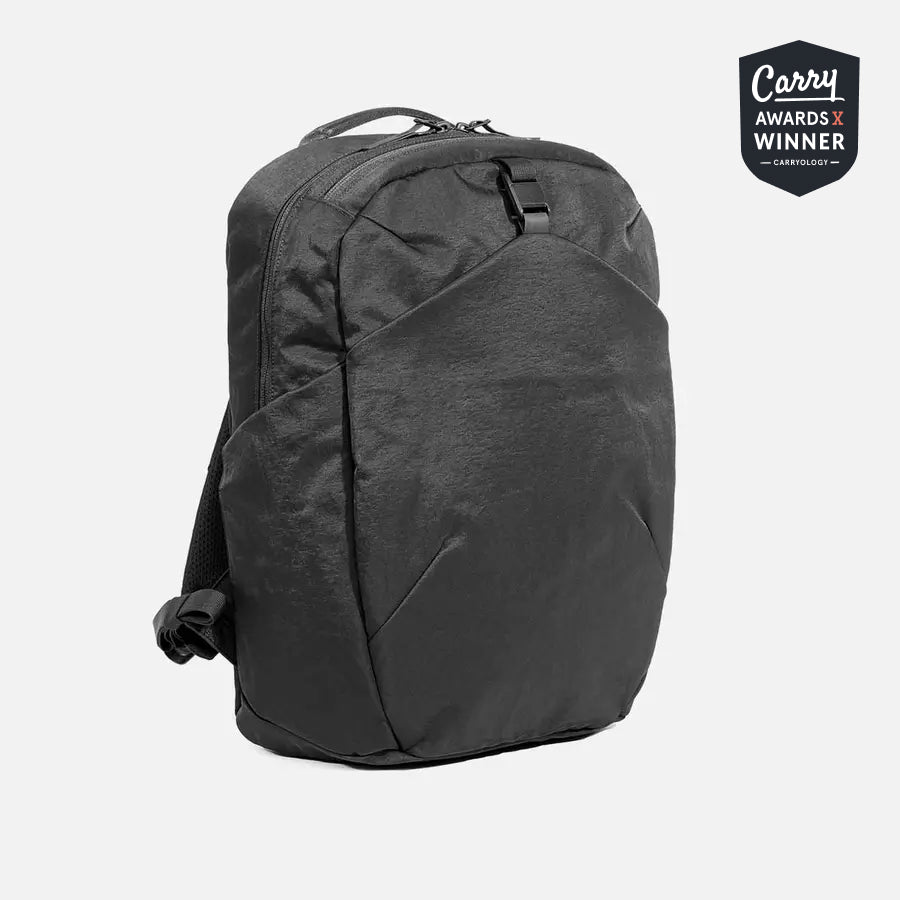
#1. Aer Go Pack 2, Best Overall
The Aer Go Pack 2 hits the middle ground I want from a lightweight everyday backpack. It remains soft and packable while providing more useful organization than a basic drawstring daypack.
- Best for: City travel, errands, sightseeing, and simple everyday carry
- Capacity: Not confirmed
- Weight: Not confirmed
- Laptop storage: Internal sleeve, device compatibility not confirmed
- Main strength: Practical external storage
- Main tradeoff: Limited structure for heavier loads
Why it works as a lightweight backpack
What attracts me most is how normal it feels in daily life. There are accessible pockets for the things I repeatedly reach for, including my phone, sunglasses, and water bottle.
That sounds ordinary, but many packable backpacks make me unzip the main compartment every time I need something small. The Go Pack 2 avoids that frustration while still being easy to flatten inside larger luggage.
The dual bottle pockets are particularly useful when I am carrying water on one side and an umbrella on the other.
What could be better
The soft construction does not provide the protection of a structured commuter backpack. A poorly packed charger or bottle may create an uncomfortable pressure point against the back.
I would also avoid treating the internal sleeve like a heavily padded laptop compartment without adding a protective sleeve of my own.
Best for this type of user
It suits travelers who want a destination daypack that can also function as a genuine everyday backpack once they return home.
Who should skip it
Skip it if you regularly carry a heavy laptop, large camera, thick textbooks, or bulky gym equipment.
Bottom line
This is my best overall pick because it preserves the convenience of a packable bag without feeling overly basic during ordinary daily use.

#2. Patagonia Refugio Daypack 26L, Best Lightweight Laptop Backpack
The Patagonia Refugio Daypack 26L is the option I would consider for work, college, or mixed daily use. Its 26L capacity provides more breathing room than most small lightweight packs.
- Best for: Work, college, commuting, and day trips
- Capacity: 26L
- Weight: 23.5 oz / 666g
- Laptop storage: Removable padded sleeve
- Main strength: Versatile capacity and removable tech organization
- Main tradeoff: The removable sleeve will not suit everyone
Why it works as a lightweight backpack
At 666g, it remains impressively light for a bag large enough to handle a laptop, lunch, jacket, charger, and everyday accessories.
The removable padded sleeve makes sense when my routine changes. I can use it for work during the week, then remove it when I want open storage for clothing or hiking equipment.
I also appreciate not having to squeeze everything into a 15L bag just to save a few hundred grams.
What could be better
The removable sleeve is flexible, but it can feel less seamless than a permanently integrated laptop compartment. Someone who carries technology every day may prefer separate rear laptop access.
The design also prioritizes open storage over detailed administration.
Best for this type of user
It is a strong choice for students, commuters, teachers, and travelers who alternate between laptop carry and recreational use.
Who should skip it
Skip it if you want a highly organized technology backpack with a rigid frame, thick device padding, and separate access for multiple electronics.
Bottom line
The Refugio is one of the easiest recommendations here for someone who needs a light backpack without giving up realistic everyday capacity.

#3. Osprey Daylite, Best for Everyday Carry
The Osprey Daylite is compact, comfortable, and easy to understand. I can picture grabbing it for a quick grocery run, an afternoon walk, or a short flight where I only need essentials.
- Best for: Errands, casual travel, short hikes, and small daily loads
- Capacity: 13L
- Weight: Not confirmed
- Laptop storage: Multifunction sleeve fits most 14-inch laptops or tablets
- Main strength: Comfortable multi-use design
- Main tradeoff: Limited capacity
Why it works as a lightweight backpack
The mesh-covered foam back panel and spacer-mesh harness give it more carrying comfort than many equally compact packs.
It also has two bottle pockets, a front organization pocket, and a sternum strap. Those features make a noticeable difference once I add water and spend several hours walking.
The bag uses recycled fabrics with a PFC-free water-repellent treatment. Readers interested in textile certification can learn what the label means through the independent bluesign explanation of certified products.
What could be better
Thirteen liters disappears quickly. After adding a bottle, jacket, and larger headphones, I would need to become selective about everything else.
The laptop sleeve is multifunctional rather than a dedicated protective compartment.
Best for this type of user
It works for people who carry relatively little and want one bag for city errands, festivals, sightseeing, and easy trails.
Who should skip it
Avoid it if you need room for college books, gym shoes, a full work setup, or overnight clothing.
Bottom line
The Daylite is an approachable, comfortable lightweight daypack, provided its compact capacity matches your routine.

#4. Matador ReFraction, Best Packable Backpack
The Matador ReFraction Packable Backpack is the bag I would pack when luggage space is genuinely limited. It weighs only 225g and folds into its own pocket.
- Best for: Destination carry, sightseeing, and travel overflow
- Capacity: 16L
- Weight: 8 oz / 225g
- Laptop storage: No dedicated padded laptop sleeve
- Main strength: Excellent packability
- Main tradeoff: Limited protection and load support
Why it works as a lightweight backpack
Matador has included several features that I usually lose when moving to an ultralight packable bag.
It has two stretch bottle pockets, water-resistant YKK zippers, a front stretch pocket, removable sternum strap, and padded breathable shoulder straps. It can also fit over a luggage handle.
That means I could unpack it at a hotel, carry water and a light jacket all day, and stow it again without dedicating much suitcase space to an empty backpack.
What could be better
The ReFraction still behaves like a packable bag. It lacks the structure and padding I would want for a heavy laptop, camera, or dense stack of books.
Its 16L capacity also limits how far I can stretch it before comfort suffers.
Best for this type of user
It is ideal for travelers who already have primary luggage but want a useful daypack at their destination.
Who should skip it
Skip it if this will be your only backpack for work or if you regularly carry valuable electronics without separate protective cases.
Bottom line
For pure packability, the ReFraction is my favorite. It keeps the weight extremely low while retaining features that make a backpack pleasant to use.

#5. Deuter Speed Lite 21, Best for Hiking
The Deuter Speed Lite 21 is designed around movement rather than office organization. Its close fit and light construction make it better suited to trails than laptop-heavy commutes.
- Best for: Day hiking and active outdoor use
- Capacity: 21L
- Weight: 470g
- Laptop storage: No dedicated laptop compartment
- Main strength: Stable trail-focused carrying system
- Main tradeoff: Minimal work organization
Why it works as a lightweight backpack
The ergonomic perforated straps, detachable waist belt, adjustable sternum strap, and close-fitting back system help control movement.
That stability matters when I am stepping over rocks or moving downhill. A loosely packed urban backpack may swing from side to side even if its empty weight is slightly lower.
The side pockets provide accessible water storage, while the front pocket gives me somewhere to place a thin layer without reopening the main compartment.
What could be better
This is not the bag I would choose for cables, documents, and a laptop. Its organization follows hiking needs, not office routines.
Deuter recommends a load range of 2 to 5kg, so it is not intended to become a heavily overloaded travel pack.
Best for this type of user
It suits day hikers who prioritize low weight, hydration access, and stability.
Who should skip it
Commuters and students needing substantial laptop protection should choose a lightweight work backpack instead.
Bottom line
The Speed Lite 21 is the best hiking option because its low weight works together with a proper trail harness instead of replacing one.

#6. Bellroy Lite Daypack, Best Minimalist Backpack
The Bellroy Lite Daypack brings a cleaner, more refined appearance to the packable category. I would be comfortable carrying it through a city without looking as though I had just left a campsite.
- Best for: Minimalist everyday carry and active travel
- Capacity: Check current product details
- Weight: Check current product details
- Laptop storage: Internal document sleeve
- Main strength: Lightweight design with refined details
- Main tradeoff: Limited device protection
Why it works as a lightweight backpack
The bag can be folded or rolled for travel, but it still includes padded breathable back panels and shoulder straps.
There is also a stretch bottle pocket, raised sunglasses pocket, essentials pocket with key clip, detachable sternum strap, and several attachment loops.
These details help it feel intentionally designed rather than simply made from thin fabric.
What could be better
The internal sleeve is intended more for documents than serious laptop protection. I would add a padded device case if I needed to carry technology.
One bottle pocket also gives me less flexibility than the dual pockets on the Aer Go Pack 2 or Matador ReFraction.
Best for this type of user
It works for minimalists who care about appearance but still want a lightweight daypack for walking, travel, or casual daily use.
Who should skip it
Skip it if you want maximum capacity, substantial structure, or detailed office organization.
Bottom line
The Lite Daypack is an attractive choice for someone who wants packability without the shiny, overly technical appearance of some ultralight bags.

#7. REI Co-op Flash 22, Best Budget Option
The REI Co-op Flash 22 offers useful hiking capacity without adding much empty weight. Its simple layout also keeps the price more approachable than many premium lightweight packs.
- Best for: Budget hiking and outdoor day trips
- Capacity: 22L
- Weight: Approximately 0.88 lb / 399g, depending on the version
- Laptop storage: No dedicated padded compartment
- Main strength: Strong capacity-to-weight value
- Main tradeoff: Soft, lightly padded construction
Why it works as a lightweight backpack
Twenty-two liters gives me enough room for food, water, a first-aid kit, and an extra layer without moving into bulky hiking-pack territory.
That capacity also aligns well with shorter outdoor trips. REI’s day-hiking checklist is useful for deciding what genuinely needs to fit rather than choosing capacity from a number alone.
What could be better
The light structure requires careful packing. Hard objects can press against the back, and heavier loads will reveal the limits of the minimalist suspension.
It is also not the natural choice for laptop commuting.
Best for this type of user
It suits occasional hikers, travelers on a budget, and people who want a lightweight outdoor bag without paying for an elaborate harness.
Who should skip it
Skip it if you need thick padding, a structured back panel, or dependable protection for expensive electronics.
Bottom line
The Flash 22 proves that a useful lightweight hiking backpack does not need to be complicated or unusually expensive.
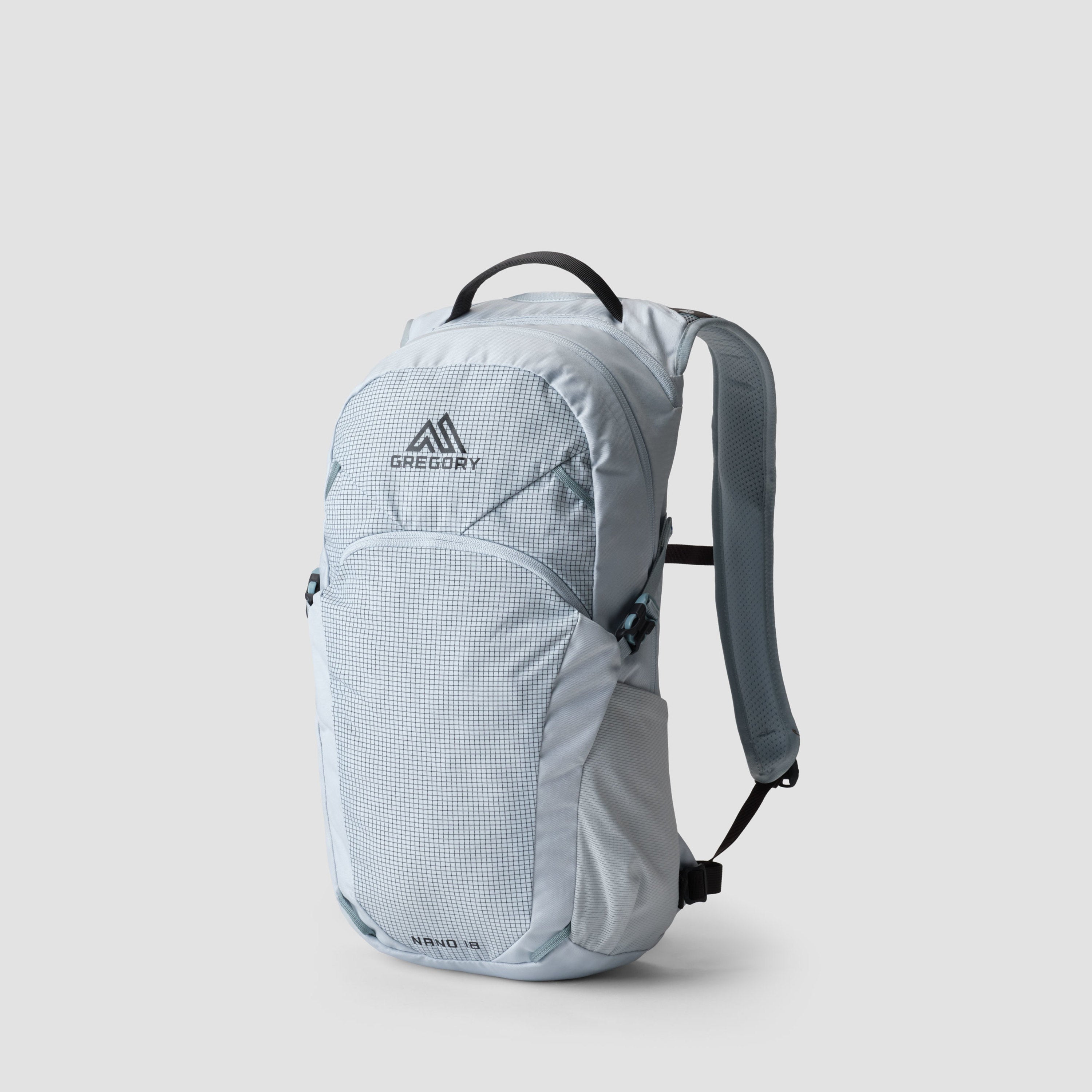
#8. Gregory Nano 18, Best for Short Hikes
The Gregory Nano 18 combines a minimalist appearance with a more trail-friendly harness than most casual daypacks.
- Best for: Short hikes, active travel, and recreational day trips
- Capacity: 18L
- Weight: Not confirmed
- Laptop storage: Reservoir sleeve can hold a tablet or small laptop
- Main strength: Comfortable outdoor carrying system
- Main tradeoff: Only one stretch bottle pocket
Why it works as a lightweight backpack
The padded airmesh shoulder harness, breathable back panel, sternum strap, and tuck-away webbing hip belt help stabilize the load.
Its hydration pocket is separate from the main compartment, so a reservoir is less likely to interfere with clothing and food. That pocket can also hold a tablet or small laptop when I return to the city.
What could be better
I would prefer two bottle pockets. Using the only side pocket for a large bottle leaves fewer options for wet gear or quick storage.
Laptop protection is also secondary rather than a central part of the design.
Best for this type of user
It suits hikers and active travelers who want more carrying comfort than a basic packable sack provides.
Who should skip it
Skip it if your daily routine revolves around a large laptop, files, chargers, and office accessories.
Bottom line
The Nano 18 is a sensible crossover pack for people whose week includes both ordinary errands and short outdoor adventures.

#9. Cotopaxi Batac 24L, Best Personal Item Backpack
The Cotopaxi Batac 24L provides a surprisingly spacious 24L capacity while weighing only 482g.
- Best for: Personal item travel, casual commuting, and flexible daily carry
- Capacity: 24L
- Weight: 17 oz / 482g
- Laptop storage: Internal sleeve
- Main strength: Excellent capacity for its weight
- Main tradeoff: Limited structure and padding
Why it works as a lightweight backpack
This is the kind of bag that lets me throw in a sweatshirt at the last minute without immediately running out of room.
Its flexible body works well with packing cubes, rolled clothing, and soft items. The low empty weight also leaves more room in my personal baggage allowance for the things I am actually traveling with.
I would still check the exact size limits published by my airline. “Personal item” is not one universal measurement.
What could be better
The lightweight construction provides less protection and load control than a structured travel backpack. When loosely packed, it may sag or allow equipment to settle at the bottom.
Dense loads will also expose the limits of its padding.
Best for this type of user
It works for casual travelers, students with light loads, and people who prefer flexible open storage.
Who should skip it
Skip it if you carry fragile camera equipment, a large laptop, or a carefully organized mobile office.
Bottom line
The Batac 24L is the personal item choice for travelers who value flexible space and low weight more than structure.
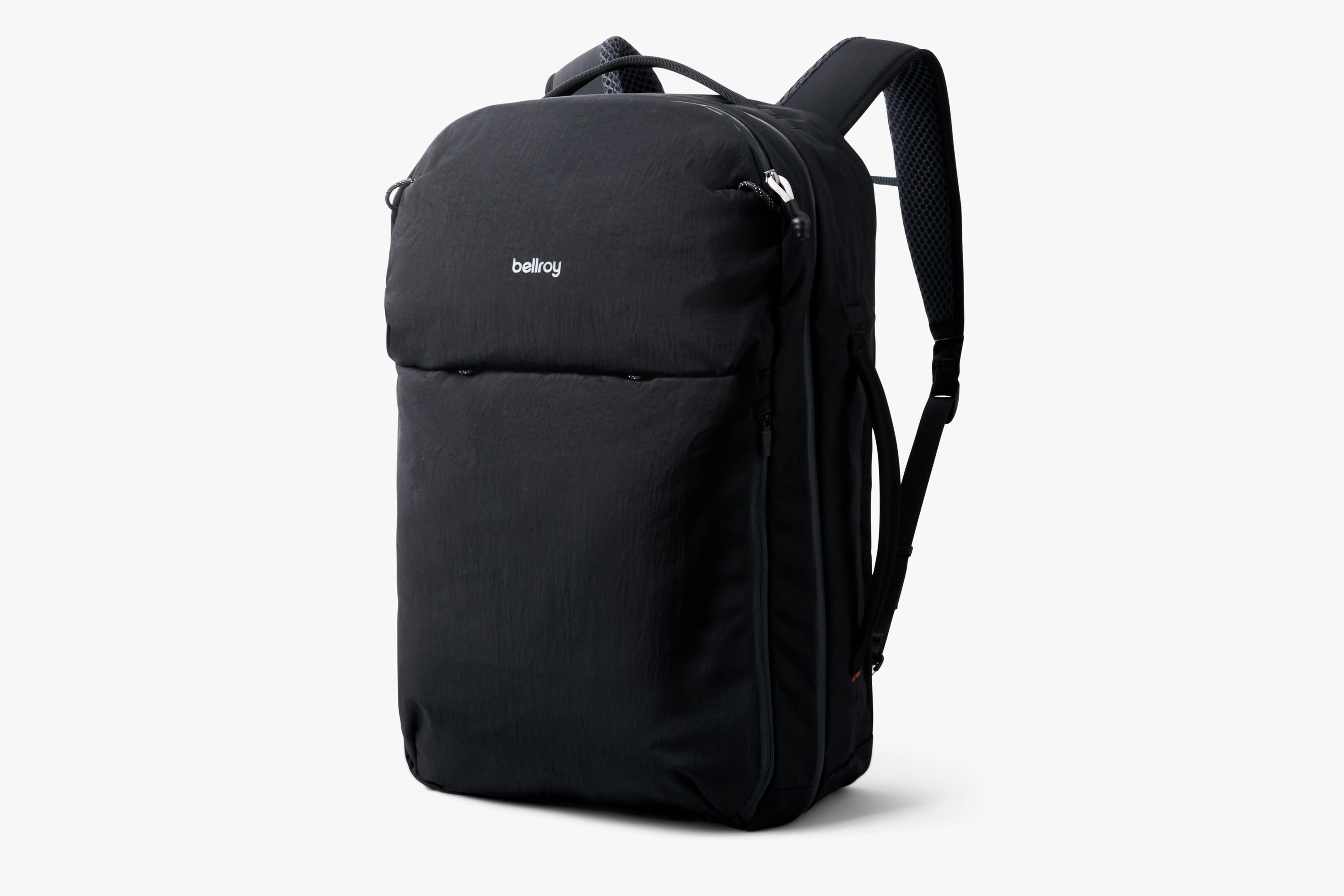
#10. Bellroy Lite Travel Pack 30L, Best Lightweight Travel Backpack
The Bellroy Lite Travel Pack 30L is built for people who want proper travel capacity without starting with a heavy suitcase-style backpack.
- Best for: Weekend travel and lightweight carry-on packing
- Capacity: 30L
- Weight: Check current product details
- Laptop storage: Dedicated device storage, check current compatibility
- Main strength: Lightweight travel-oriented layout
- Main tradeoff: Less load support than heavier travel backpacks
Why it works as a lightweight backpack
Thirty liters gives me enough space to use packing cubes, carry clothing for a short trip, and keep technology separate from softer items.
It is also more travel-focused than the daypacks above. Instead of forcing folded clothing through a narrow top opening, its layout is intended to make packing and unpacking less irritating.
This is the option I would choose when the backpack itself is my main luggage rather than a secondary day bag.
What could be better
Reducing weight inevitably means reducing some padding, frame structure, or heavy-duty hardware. When packed with dense equipment, a more substantial travel backpack may distribute the load better.
Thirty liters can also exceed the personal item limit on stricter airlines.
Best for this type of user
It suits organized travelers who pack lightly but still need more space than a 16L destination daypack provides.
Who should skip it
Skip it if you regularly carry very heavy loads, need an adjustable torso system, or expect the pack to handle rugged outdoor travel.
Bottom line
This is my best lightweight travel backpack for short trips where low empty weight and easy packing matter more than maximum suspension.
How to Choose the Best Lightweight Backpack
Decide How Light You Really Need It to Be
Ask what you are trying to achieve.
If the backpack will live inside a suitcase, 200 to 400g may be realistic. If it must protect a laptop and remain comfortable during a full commute, accepting 600 to 900g can produce a much better experience.
Saving 300g is not worthwhile if the resulting straps make every walk uncomfortable.
Choose the Right Capacity
10L to 15L
Best for very light daily carry, short walks, compact packable bags, and a few essential items.
16L to 22L
This is the sweet spot for sightseeing, city travel, day hiking, and minimalist everyday carry.
23L to 30L
Better for college, commuting, gym clothing, laptop setups, and light travel.
30L and above
Useful for weekend trips and people who want one lightweight backpack to function as their main luggage.
Patagonia’s general pack-size guide places 5L to 20L packs around short outings and 21L to 35L packs around full days, though your equipment still determines the ideal size.
Check the Shoulder Straps
Look beyond the word “padded.”
I check the width, shape, attachment points, adjustability, and whether the straps remain comfortable near the top of the bag’s realistic load range.
Thin but wide straps can perform well. Narrow straps with soft foam may still create pressure.
Think About Structure
A soft packable backpack folds easily but requires thoughtful packing. A semi-structured daypack holds its shape better without becoming heavy. A lightweight laptop backpack adds padding and organization but becomes less packable.
Choose according to what will be carried, not simply where the backpack will be used.
Also Read: 10 BEST Backpacks for College [My TOP Picks]
Look at Laptop Protection
For regular technology carry, look for:
- Padded sleeve walls
- A false bottom that suspends the device above the base
- Secure closure
- A properly sized compartment
- Separate access if you frequently remove the laptop
In an ultralight bag, I would use a protective laptop sleeve rather than trusting a thin internal divider.
Check Bottle and Quick-Access Storage
A bottle pocket saves me from opening the bag every time I need water. A secure top or front pocket also stops keys, tickets, and earbuds from sinking beneath clothing.
However, too many pockets add weight and make it harder to remember where I placed something. Useful placement matters more than the number of compartments.
Consider Materials and Weather Resistance
Check the actual fabric, stitching, coating, and zippers rather than relying on the word “durable.”
Ripstop construction can limit the spread of small tears. Coated zippers and water-repellent treatments provide useful protection during light rain, but they do not necessarily make a backpack waterproof.
Do Not Ignore Comfort Once Packed
A balanced load can feel dramatically better than the same weight sitting far away from the back. REI’s backpack-loading guide explains how thoughtful weight placement can reduce shifting and improve balance.
Load the backpack with your normal equipment before deciding whether it is comfortable.
Match the Backpack to Your Use Case
Travel
Prioritize packability, luggage pass-throughs, secure pockets, easy opening, and compliance with your airline’s limits.
Work
Look for laptop protection, a stable base, a professional appearance, and quick access to chargers and small accessories.
College
Choose enough room for books, technology, lunch, and a bottle. A tiny packable bag may become uncomfortable with dense textbooks.
Also Read: 9 BEST Backpacks for Sports and Gym [My TOP Picks]
Hiking
Prioritize hydration storage, stable straps, ventilation, sternum support, and enough capacity for emergency equipment.
Gym
Look for open space, easy-clean fabric, bottle storage, and room to separate shoes or damp clothing.
Personal item flights
Check the measurements published by the airline. Do not assume a bag qualifies simply because its product page calls it a personal item.
Minimalist everyday carry
A 15L to 20L pack with one bottle pocket and a few accessible compartments is usually enough.
Digital nomad use
Laptop protection, charger organization, security, and long-duration comfort matter more than achieving the lowest possible weight.
Packable backup bag
Choose a backpack that folds small, has comfortable enough straps, and does not require a complicated packing process every time it is stored.
Types of Lightweight Backpacks
Packable Lightweight Backpacks
These fold or compress for storage inside another bag. They are excellent for sightseeing and backup carry but generally provide less structure and device protection.
Lightweight Laptop Backpacks
These include padded sleeves and a more stable back panel. They weigh more than packable bags but make better everyday companions for work and school.
Lightweight Hiking Daypacks
Trail models emphasize hydration, stable straps, ventilation, and external storage. Their pockets may feel too simple for office equipment.
Lightweight Travel Backpacks
These provide larger openings, clothing storage, laptop space, and travel-friendly organization. They are usually lighter than heavily structured carry-on backpacks but less packable than daypacks.
Minimalist Everyday Backpacks
These remove unnecessary dividers and hardware while preserving the basic comfort and pockets needed for daily life.
Lightweight Backpack Checklist
Before buying, check that the backpack has:
- Low empty weight for its size
- Comfortable, properly shaped straps
- Enough capacity for your actual routine
- Water bottle storage
- A padded laptop sleeve when required
- Durable fabric for its weight
- Smooth, dependable zippers
- An accessible pocket for small essentials
- A comfortable back panel
- Suitable weather resistance
- A packable or slim design when needed
- Enough structure to prevent severe sagging
- A fit that matches your torso
- A realistic load limit
- Features you will genuinely use
Common Mistakes When Buying a Lightweight Backpack
Buying the lightest option without checking comfort
Low weight cannot compensate for straps that dig into the shoulders.
Choosing a backpack that is too small
Constantly forcing the zipper closed is a good sign that the saved capacity was not worthwhile.
Ignoring laptop protection
A thin fabric divider is not equivalent to a suspended padded compartment.
Expecting packable bags to carry heavy loads well
Packable backpacks are designed around storage convenience. Most are not substitutes for supportive commuter or hiking packs.
Forgetting water bottle storage
Carrying water inside the main compartment creates inconvenience and potential leakage around electronics.
Ignoring zipper and stitching quality
Lightweight fabric still needs dependable construction at the strap anchors, zipper ends, and heavily loaded seams.
Choosing no structure when you need daily support
Soft bags can collapse around awkward equipment and place hard objects against the back.
Buying a weak travel bag for regular use
A destination daypack may not survive the same treatment as a primary travel backpack.
Overpaying for a bag that is only light
Low weight is valuable only when the backpack remains comfortable, durable, and useful.
Final Verdict: What Is the Best Lightweight Backpack?
The Aer Go Pack 2 is my best lightweight backpack for most people because it combines packability with genuinely helpful everyday pockets.
The Bellroy Lite Travel Pack 30L is the strongest travel choice, while the Patagonia Refugio 26L makes more sense for laptops, work, and college.
Choose the Matador ReFraction when packability matters most, the Deuter Speed Lite 21 for hiking, and the REI Flash 22 for an affordable outdoor option.
The Bellroy Lite Daypack is my minimalist pick, while the Cotopaxi Batac 24L provides useful personal item capacity at a low empty weight.
Ultimately, the best lightweight backpack is not necessarily the one with the smallest number on the scale. It is the lightest bag that still carries your real equipment comfortably.
Also Read: 11 BEST Backpacking Backpacks for Trail [My TOP Picks]
FAQs About the Best Lightweight Backpack
What is the best lightweight backpack for most people?
The Aer Go Pack 2 is my best overall choice because it combines soft, packable construction with useful bottle and quick-access storage. However, laptop users may prefer the Patagonia Refugio 26L, while travelers needing their backpack to function as primary luggage should consider the Bellroy Lite Travel Pack.
How much should a lightweight backpack weigh?
A compact packable backpack may weigh approximately 200 to 500g. A lightweight everyday or laptop backpack commonly weighs more because it includes padding, structure, and additional hardware. Compare bags within the same category. A 30L travel backpack should not be judged by the same weight standard as a 13L daypack.
Are lightweight backpacks durable?
They can be. Fabric quality, ripstop construction, reinforced seams, and zipper reliability matter more than thickness alone. Lightweight materials may still resist ordinary travel and daily wear, but they generally provide less abrasion resistance and structure than heavy-duty fabrics. Avoid dragging them across rough surfaces or consistently exceeding their intended load.
What size lightweight backpack should I buy?
Choose 10L to 15L for essentials, 16L to 22L for everyday carry and day trips, and 23L to 30L for work, college, or light travel. Larger options suit weekend packing. Lay out everything you normally carry before selecting capacity, because advertised volume can be difficult to visualize.
Are packable backpacks good for everyday use?
Packable backpacks work well for light everyday loads, especially clothing, snacks, and small accessories. They become less comfortable when filled with laptops, books, cameras, or large water bottles. If you intend to use one daily, look for padded straps, a usable back panel, bottle storage, and some internal organization.
Can a lightweight backpack carry a laptop?
Yes, but protection varies significantly. Lightweight laptop backpacks may include padded sleeves and false bottoms, while packable bags often provide only thin internal dividers. Confirm device compatibility and examine the base padding. I would add a separate protective sleeve when carrying a laptop inside a soft or ultralight backpack.
What is the best lightweight backpack for travel?
The Bellroy Lite Travel Pack 30L is my choice when the backpack will function as primary travel luggage. The Matador ReFraction is better as a packable destination daypack. For flights, always compare the packed bag’s external dimensions with the allowance published by your airline before arriving at the airport.
Is a lightweight backpack good for hiking?
Yes, provided it has stable straps, hydration storage, suitable capacity, and enough comfort for the complete load. The Deuter Speed Lite 21 is my preferred hiking option. Remember that water, food, navigation, weather protection, and emergency supplies matter more than achieving an impressively low pack weight.
What should I avoid in a lightweight backpack?
Avoid extremely narrow straps, weak stitching, difficult zippers, poor bottle storage, and a body that collapses uncomfortably around your equipment. Also avoid buying a packable backpack for heavy daily loads. Lightweight construction should simplify the bag without removing the features required for comfort and safe storage.
Is a lightweight backpack better than a regular backpack?
It is better when the reduced weight improves travel or daily comfort without compromising necessary support. A heavier backpack may be the smarter choice for large laptops, camera equipment, textbooks, or dense travel loads. The goal is not to own the lightest possible bag. The goal is to carry your equipment with less strain.
![7 BEST Kids Backpacks for School [My TOP Picks]](https://thebloggingtraveller.net/wp-content/uploads/2026/07/ChatGPT-Image-Jul-16-2026-10_37_09-PM-1-768x432.png)
![8 BEST Herschel Backpacks [Which Should You BUY?]](https://thebloggingtraveller.net/wp-content/uploads/2026/07/ChatGPT-Image-Jul-21-2026-06_38_55-PM-1-768x432.png)
![10 BEST Budget Travel Backpacks [My TOP Picks]](https://thebloggingtraveller.net/wp-content/uploads/2026/07/ChatGPT-Image-Jul-17-2026-10_24_30-AM-1-1-768x432.png)
![8 BEST Hiking Backpacks for Men [My TOP Picks]](https://thebloggingtraveller.net/wp-content/uploads/2026/07/ChatGPT-Image-Jul-19-2026-11_01_12-PM-1-768x432.png)
![11 BEST Backpacking Backpacks for Trail [My TOP Picks]](https://thebloggingtraveller.net/wp-content/uploads/2026/07/11-BEST-Backpacking-Backpacks-for-Trail-My-TOP-Picks-768x432.png)